
Every great product starts with a Vision. The core agenda of every product development is a dream of solving a problem or making life better. But Vision alone isn’t enough to create something users love. To make this crucial journey from initiating the spark to a successful, tangible product, a complete journey guided by a key player, who is called the “Product Owner”.
The Product Owner is the person who transforms abstract concepts into tangible products that solve real problems. Without this role, even the most brilliant idea can get lost in translation. So, how does a Product Owner perform transformation? In this article, let’s break down the PO’s key responsibilities in turning an ambitious Vision into a working reality.
How The Product Owner Acts as a Vision Keeper:
The Product Owner is like a ship captain; even in rough sea conditions, he guides the whole team safely toward the goal by practicing effective PO responsibilities. Here we discuss some key things.
1. Translate the “Why” into the “What”
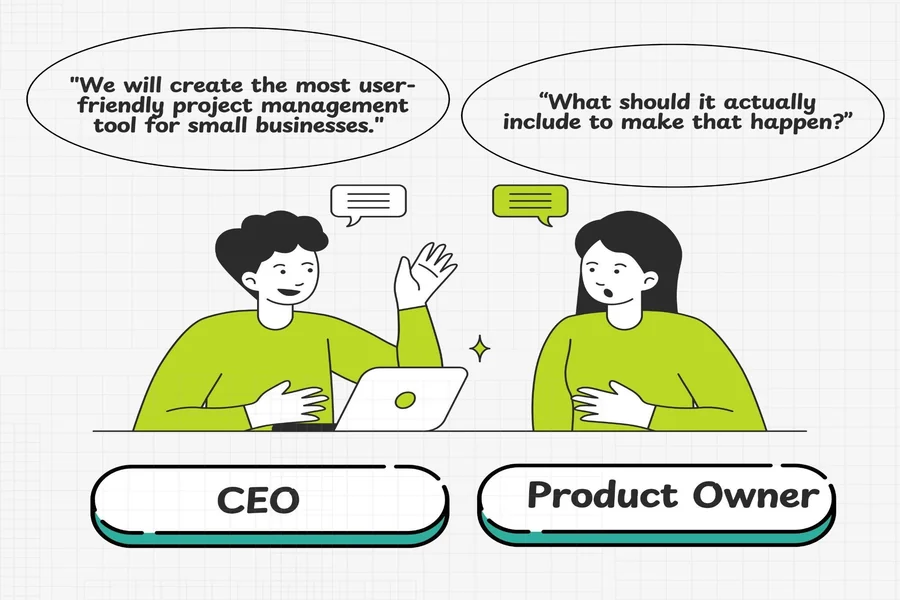
Let’s consider the situation that the CEO or stakeholder has a Vision: “We will create the most user-friendly project management tool for small businesses.” The Product Owner’s job is to absorb this “why” and translate it into a concrete “what”.
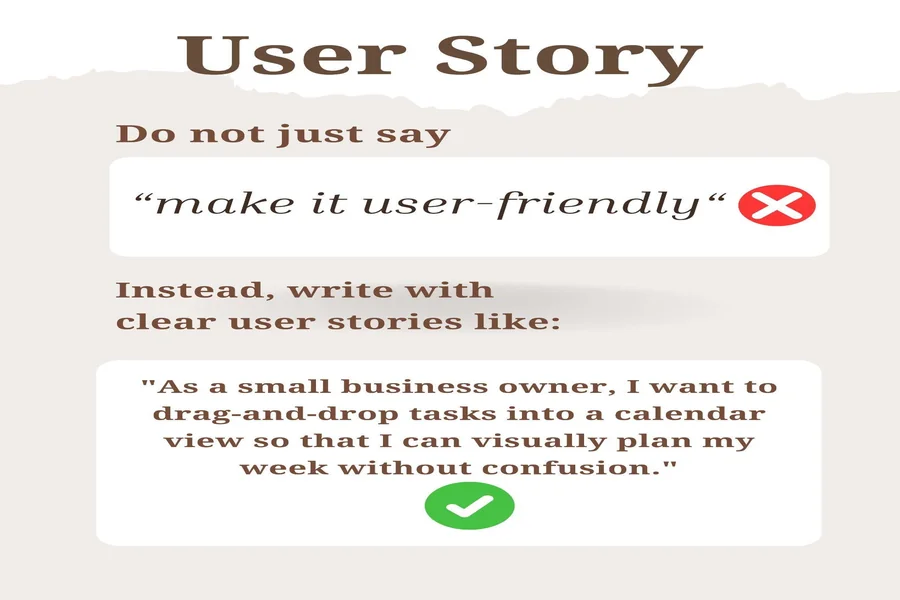
Notice the difference between these two statements? The first is vague, but not unclear, and is impossible for developers to build. But the second is specific, actionable, and gives the development team exactly what to develop.
Notice the difference? The first statement is motivational, but impossible to build. The second is specific, actionable, and gives the development team exactly what they need to start creating. This translation work is the foundation of turning Vision into reality.
So the Clarity is the first important step in making the Vision buildable for the development team.
2. Keep Backlog Sharp and Well-Ordered
One Vision can spark hundreds of potential ideas. The PO is completely responsible for the Product Backlog Management, which is not just a simple to-do list, but a strategic blueprint for the entire product.
They arrange every feature, improvement, and fix in order of priority, constantly asking one critical question:
At this point, the PO should make tough calls by delaying nice-to-have features to focus on the must-have; the PO brings the core Vision to life faster.
3. Act as the Voice of the User and the Business
A Product Owner is the team’s compass. They deeply understand the user’s pain points through research and feedback, and make sure the product solves real problems.
At the same time, on the other side, they must balance business goals like revenue targets, market positioning, and competitive advantages.
When a developer asks,
The Product Owner provides answers that serve both the user experience and business objectives.
This dual perspective keeps projects aligned with their ultimate purpose while ensuring the product actually solves real problems.
4. Steps Towards Upskilling:
Transforming the Product Vision into reality always sounds inspiring, but without the right skills, it just remains talk for every Product Owner. Taking steps toward CSPO certification is the best decision; it equips every Product Owner or aspiring Product Owner with the practical tools to make this happen in reality. You will be an expert in backlog prioritization, stakeholder management, and user story creation. This training covers,
- Sprint planning,
- Value-driven decisions, and
- Feedback adaptation.
These are essential skills for translating ambitious ideas into deliverable features.
Essential Skills Every Product Owner Needs To Make Vision into Reality:
To become an effective Product Owner, every PO requires a unique blend of skills:
Communication Excellence: You must explain complex ideas clearly to different audiences, from technical developers to non-technical executives.
Strategic Thinking: See the big picture while managing day-to-day details. Understand how today’s decisions impact tomorrow’s possibilities.
Empathy: Try to see things from the user’s point of view. Try to understand their frustrations and desires. This user-centric mindset drives better product decisions.
Decisiveness: Make tough calls quickly, even with incomplete information. Waiting for perfect information means missing opportunities.
Negotiation: Balance competing priorities and find compromises that satisfy various stakeholders while protecting the product Vision.
Conclusion:
The final and most important role of the PO is to decide when a feature is truly “Done”. They are the official accepters of the work, verifying that what was built actually meets the definition of done and, more importantly, delivers on the promise of the user story.
The Product Owners make sure the great plan doesn’t stay as just a slide in a presentation, but,
They translate:
- Dreams into requirements,
- Ideas into features, and
- Visions into a real product
That genuinely makes a difference and that users enjoy, and businesses benefit from.