
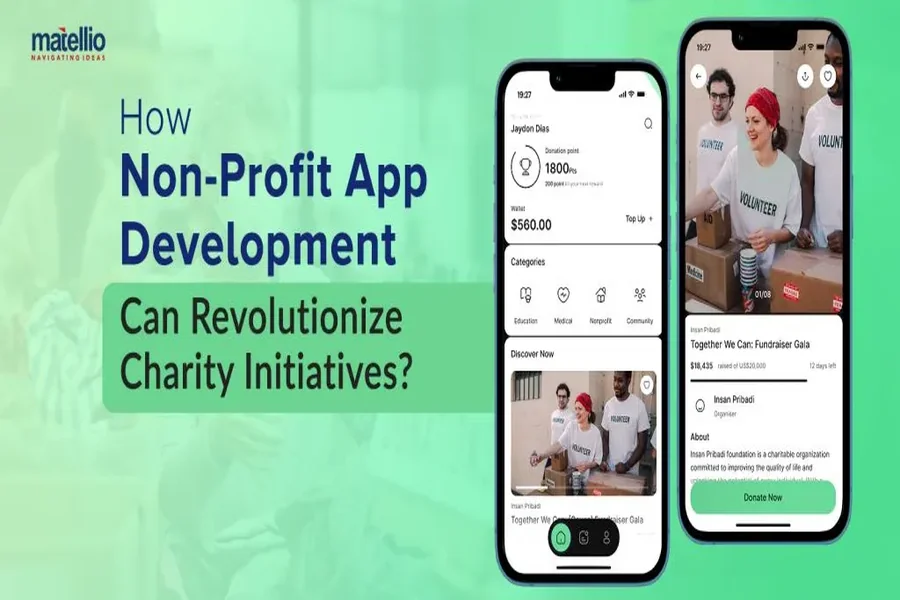
Non-profit organizations today face increasing pressure to do more with fewer resources. Whether it’s raising awareness, managing donors, coordinating volunteers, or delivering services, technology has become a critical enabler. Mobile and web applications are no longer a luxury for non-profits—they are a necessity. A well-planned app can help a non-profit expand its reach, improve engagement, and streamline operations.
However, building an app for a non-profit is very different from developing one for a commercial business. Budget constraints, mission alignment, user diversity, and long-term sustainability all play a major role. This guide walks you through the complete non-profit app development process, step by step, in a clear and practical way.
Understanding the Purpose of a Non-Profit App
Before writing a single line of code, it’s important to understand why the app is needed. Non-profit apps are mission-driven, not profit-driven. The goal could be increasing donations, spreading awareness, organizing events, supporting beneficiaries, or managing internal operations.
Some common objectives of non-profit apps include donor management, volunteer coordination, fundraising campaigns, educational content delivery, community building, and service access for beneficiaries. Defining the core purpose early ensures that every feature supports the organization’s mission rather than unnecessary complexity.
Identifying the Target Audience
Non-profit apps often serve multiple audiences. These can include donors, volunteers, staff members, beneficiaries, partners, and the general public. Each group has different needs, technical skills, and expectations.
For example, donors may want an easy and secure way to contribute, while volunteers may need scheduling tools and notifications. Beneficiaries may require simple interfaces with accessibility features. Understanding who will use the app helps shape the design, functionality, and overall user experience.
Creating user personas for each audience group can make this process clearer and more structured.
Research and Market Analysis
Even though non-profits operate differently from businesses, market research is still essential. Researching similar non-profit apps can reveal best practices, common mistakes, and feature ideas.
This phase involves analyzing competitor apps, studying user reviews, and understanding what works well and what doesn’t. It also includes checking compliance requirements, data privacy regulations, and accessibility standards relevant to the organization’s region and sector.
Research helps avoid reinventing the wheel and ensures the app meets real user needs rather than assumptions.
Defining Features and Scope
Once goals and users are clear, the next step is defining the app’s features. This is where many non-profit projects fail due to overambition. Limited budgets make it crucial to focus on essential features first.
A minimum viable product approach works well for non-profits. Instead of building everything at once, prioritize features that deliver the highest impact. These might include donation processing, user registration, content management, push notifications, or event listings.
Clearly defining the scope prevents budget overruns and keeps the development process manageable.
Choosing the Right Platform
Deciding whether to build a mobile app, web app, or both depends on the audience and use case. Mobile apps are ideal for frequent engagement and notifications, while web apps are more accessible and cost-effective.
Some non-profits opt for cross-platform development to reach both Android and iOS users without doubling costs. Others start with a responsive web app and later expand to mobile.
The right platform choice balances user needs, budget, and long-term maintenance.
UX and UI Design for Non-Profits
Design plays a crucial role in non-profit apps. The interface must be simple, intuitive, and inclusive. Many users may not be tech-savvy, so clarity is more important than flashy visuals.
Accessibility is especially important. This includes readable fonts, proper contrast, screen reader compatibility, and easy navigation. A well-designed app ensures that people of all abilities can use it comfortably.
Design should also reflect the organization’s values and branding while keeping the focus on usability.
Selecting the Right Technology Stack
Choosing the right technology stack affects performance, scalability, and maintenance costs. Non-profits should prioritize stable, widely supported technologies that offer long-term reliability.
Open-source tools are often a good fit, as they reduce licensing costs and provide flexibility. Cloud services can also help manage hosting and scaling efficiently.
The goal is to build a solution that the organization can afford to maintain, not just launch.
Development Phase
The development phase brings the app to life. This is where developers build the backend, frontend, databases, and integrations. Regular communication between developers and stakeholders is essential to ensure alignment with goals.
Agile development methodologies work well for non-profit projects. They allow for incremental progress, regular feedback, and adjustments as needs evolve. This reduces the risk of building features that aren’t truly needed.
Throughout development, security should be a top priority, especially when handling donations, personal data, or sensitive information.
Integration with Third-Party Services
Most non-profit apps rely on third-party integrations. These can include payment gateways, email marketing tools, CRM systems, analytics platforms, and social media networks.
Choosing reliable and secure third-party services saves development time and improves functionality. However, it’s important to ensure that these integrations comply with data protection laws and align with the organization’s privacy policies.
Well-planned integrations make the app more powerful without unnecessary complexity.
Testing and Quality Assurance
As highlighted by Simpalm, a non-profit app development company, “Testing is a critical step that should never be rushed. Non-profit apps must function reliably, as users may depend on them for important services. Testing includes functionality testing, usability testing, performance testing, and security testing. Involving real users, such as volunteers or staff members, can provide valuable feedback before launch.”
Launch and Deployment
Launching a non-profit app involves more than uploading it to an app store or server. A launch plan should include communication with stakeholders, training staff, and promoting the app to users.
Clear instructions and onboarding guides help users understand how to use the app effectively. For donation or service apps, ensuring everything works smoothly at launch is especially important.
A soft launch or beta release can help identify final issues before a full rollout.
Post-Launch Support and Maintenance
App development doesn’t end at launch. Ongoing maintenance is essential to fix bugs, update features, and ensure compatibility with new devices or operating systems.
Non-profits should plan for long-term support from the beginning. This includes allocating budget, assigning responsibilities, and setting update schedules.
Regular updates also show users that the organization is active and committed to improving the app.
Measuring Impact and Success
For non-profits, success isn’t measured in revenue alone. Key metrics might include user engagement, donation growth, volunteer participation, service usage, or awareness reach.
Analytics tools can help track these metrics and identify areas for improvement. Gathering user feedback through surveys or reviews provides qualitative insights that data alone can’t capture.
Measuring impact ensures the app continues to serve its mission effectively.
Budgeting and Funding Considerations
Budgeting is often one of the biggest challenges for non-profit app development. Costs include design, development, testing, hosting, and maintenance.
Some non-profits explore grants, sponsorships, partnerships, or pro bono development support to reduce costs. Others phase development over time to spread expenses.
Transparent budgeting and realistic expectations help avoid financial strain and project delays.
Ensuring Data Privacy and Compliance
Non-profits often handle sensitive data, including personal information and payment details. Compliance with data protection laws such as GDPR or regional regulations is essential.
Clear privacy policies, secure data storage, and proper consent mechanisms protect both users and the organization. Working with experienced developers who understand compliance requirements is highly recommended.
Trust is critical for non-profits, and data protection plays a major role in building that trust.
Scaling and Future Growth
As a non-profit grows, its app should be able to grow too. Planning for scalability ensures the app can handle more users, new features, and expanded services.
This doesn’t mean building everything upfront. It means choosing technologies and architectures that support future expansion without major rebuilds.
A scalable app supports long-term mission growth and adaptability.
Common Challenges in Non-Profit App Development
Non-profit app development comes with unique challenges, including limited budgets, changing requirements, and resource constraints. Balancing mission goals with technical realities can be difficult.
Clear communication, realistic planning, and strong partnerships help overcome these challenges. Staying focused on impact rather than perfection keeps projects moving forward.
Learning from other non-profits and seeking expert guidance can also reduce risks.
Final Thoughts
Developing an app for a non-profit is a powerful way to amplify impact, improve efficiency, and engage supporters. When done thoughtfully, technology becomes a force multiplier for good.
The key to success lies in clear goals, user-centered design, careful planning, and sustainable development. By following a structured non-profit app development process, organizations can build digital tools that truly support their mission and make a lasting difference.