

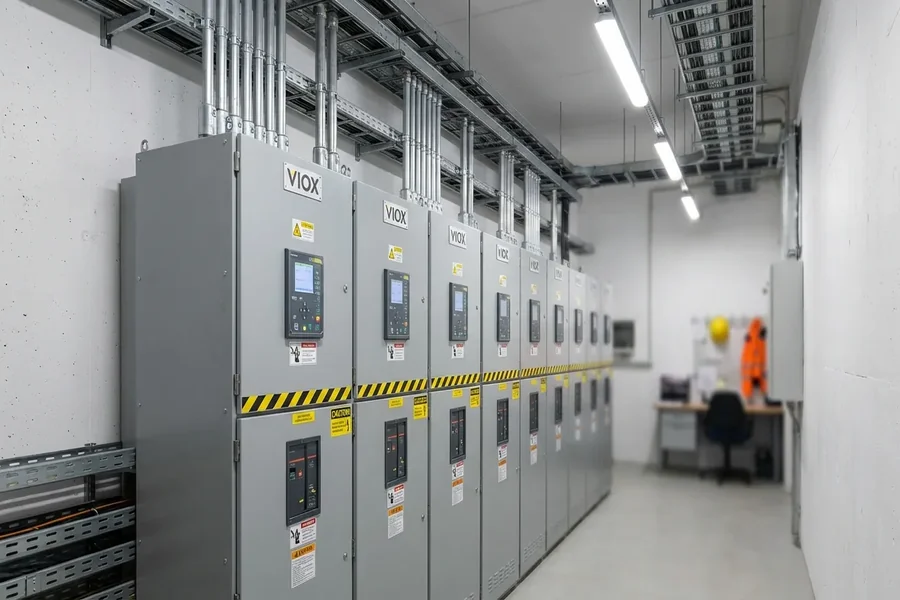
There’s a particular sound every facility manager knows.
It’s not loud. Not dramatic. Usually just a low, unsettling hum coming from an electrical room that hasn’t been touched since fax machines were considered advanced technology.
At first, everyone ignores it.
Then someone notices a breaker tripping more often than usual. A production line experiences unexplained downtime. Maintenance starts using phrases like “temporary workaround”, which, in industrial settings, often means this has been quietly held together by equal parts expertise and optimism.
And that’s when reality sets in.
Aging infrastructure doesn’t politely announce its retirement plans. It simply becomes less reliable, less efficient, and far more expensive to maintain. For industrial facilities operating with outdated electrical switchboards, retrofitting isn’t just a technical upgrade, it’s often the difference between operational continuity and costly disruption.
The good news? Full electrical system replacement isn’t always necessary. Custom-engineered retrofit solutions, supported by reliable component sourcing from providers like Verified Breakers, offer a smarter path forward.
Because ripping everything out at once is rarely anyone’s favorite option. Financially. Logistically. Emotionally.
Why Aging Switchboards Become Operational Liabilities
Electrical infrastructure has a funny way of aging quietly, until it doesn’t.
Many industrial facilities still rely on electrical switchboards installed decades ago, long before today’s energy demands, automation systems, and digital monitoring requirements became standard.
Back then, those systems were built for a different operational reality.
Today? Increased electrical loads, expanded machinery, and continuous production demands place stress on equipment that was never designed to handle modern performance expectations.
The result often looks like this:
- Frequent breaker failures
- Overheating components
- Limited replacement part availability
- Reduced fault protection reliability
- Higher maintenance costs
And here’s the uncomfortable truth: every temporary patch increases long-term risk.
Sure, that aging switchboard may still technically function.
So does a car with 250,000 miles and a dashboard lit up like a holiday display.
Functioning isn’t exactly thriving.
The Case for Custom Retrofitting
Complete electrical replacement can bring operations to a standstill.
For industrial environments, that kind of downtime isn’t merely inconvenient, it can trigger production losses, missed deadlines, and significant revenue impact.
That’s why retrofitting has become the preferred strategy for many facilities.
Custom-engineered retrofits allow organizations to modernize electrical switchboards while preserving compatible infrastructure already in place. Instead of overhauling the entire system, targeted upgrades address performance bottlenecks and safety vulnerabilities.
This often includes:
- Replacing obsolete breakers
- Upgrading bus systems
- Enhancing protective relays
- Improving arc fault mitigation
- Integrating modern monitoring capabilities
It’s a surgical approach rather than a demolition project.
And frankly, industrial operations tend to appreciate solutions that don’t involve tearing half the building apart.
Component Sourcing Is Where Retrofits Succeed, or Stall
Here’s where even well-planned retrofit projects can hit a wall.
Obsolete components.
Older electrical switchboards often rely on breakers and assemblies that are no longer manufactured or widely stocked. Finding verified, compatible replacements becomes the difference between a streamlined retrofit and weeks of project delays.
This is why trusted suppliers matter.
Verified Breakers provides access to tested, verified electrical components that support industrial retrofit projects where compatibility and reliability are non-negotiable.
Because “close enough” is not an acceptable engineering standard.
Not when production uptime is on the line.
Not when safety inspections are involved.
And definitely not when everyone is already stressed enough.
Engineering for the Future, Not Just Fixing the Present
The smartest retrofits don’t simply solve today’s problem.
They anticipate tomorrow’s demands.
Custom retrofitting should account for future expansion, higher load requirements, digital integration, and evolving compliance standards. That means engineering solutions with scalability built in, not just restoring systems to their original state.
Industrial facilities that approach retrofits strategically position themselves for:
- Improved operational resilience
- Better energy efficiency
- Reduced maintenance interruptions
- Easier future upgrades
- Stronger long-term compliance readiness
It’s not just repair.
It’s infrastructure planning with foresight.
Modernization Without the Chaos
Industrial retrofitting isn’t glamorous work.
No ribbon-cutting ceremonies. No flashy unveiling.
Just smarter systems, quieter electrical rooms, and fewer 3 a.m. emergency calls because a breaker decided it had finally had enough.
Custom-engineered upgrades to aging electrical switchboards, paired with dependable sourcing through partners like Verified Breakers, allow facilities to modernize efficiently without unnecessary disruption.
And honestly?
If your electrical room has been making suspicious humming noises for the last six months, it might be trying to tell you something.