

The fastening systems form a silent support of aerospace and automobile structure. Since joining lightweight alloys in aircraft fuselages or high-strength steels in vehicle chassis, there is no compromise in the reliability of any joint. Improvements in fastening design no longer only include the aspect of selecting hardware. They are multifaceted in modeling and material compatibility studies as well as manufacturing precision.
Additional variables to be evaluated by engineers include geometry, fatigue resistance, load cycles, and vibration damping. Designers can increase fastener performance by using the appropriate types of drill bits to penetrate the material, and by optimizing the type of thread used in each application.
Material Interfaces and Mechanical Demands
Optimization strategies must not be the same between aerospace and automotive fasteners because operational conditions are quite different. Structures of aircrafts require that the lightest possible jointing be used in the structure maintenance, but on the other hand, those of cars would require cost efficient, easily manufactured and also vibration damping in their jointing. Both environments, however, are similar in that they depend on exact material-fastener compatibility.
Advanced steels, titanium and aluminum alloy are sensitive to preload and cyclic stress. The most appropriate type of thread should be chosen in order to avoid localized yielding and equalize stresses. Aerospace professionals may choose UNJ or MJ thread forms with radiused roots because these forms retard crack initiation in a high-cycle fatigue environment. By contrast, automotive systems will often use rolled or metric threads due to their lower cost and good usage in vibration-prone applications on chassis. Further fatigue improvement is achieved in Thread rolling due to cold-worked strengthening of surface.
Drilling strategy also plays a decisive role. The types of drill bits selected must align with both substrate and joint requirements. Carbon-fiber laminates which could tend to delaminate require tools with brad-points, or diamond-coated tools, in order to preserve laminates. Hardened steels, on the other, hand need the use of cobalt or carbide drills to maintain dimensions under large bunch run production. The interaction between the mechanics of cutting, the mechanics of the material and surface finish are the eventual determinant of reliability of fastening in industry.
Weight vs. Strength Dilemma in Fastening Design
The challenge that both aerospace and automotive engineers solve continuously is how to have strong joints at a minimum weight. Lightweight of fasteners will reduce system weight but potentially reduce capacity to generate preload. Larger diameter fasteners will increase strength but increase weight and can cause stress concentrations.
One of the solutions is Thread design. For example, by optimizing the type of thread (e.g., moving to a better profile angle), the engineer can obtain higher load transfer efficiency in an absolute minimal volume of material. Lightweight alloys like 7075 aluminum require properly selected fasteners that have high shear strength and carbon-fiber reinforced plastics may need to have inserts to prevent thread stripping.
Hole preparation is a decisive factor The inappropriate choice of the types of drill bits may also present micro-cracks or fiber pull-outs that weakens a joint. In high-RPM aerospace drilling, to reduce heat buildup there is a tendency to use peck drilling with diamond-coated tools (thereby reducing the possibility of degradation in the composites matrix). These sorts of details make fastening design reliable, rather than early-stage death of a connection.
Precision Machining and Geometric Control
Textile performance optimization requires not only material selection, but also preciseness in the machining of the textile. Preload retention and fatigue life are highly dependent on hole roundness, surface finish and concentricity.
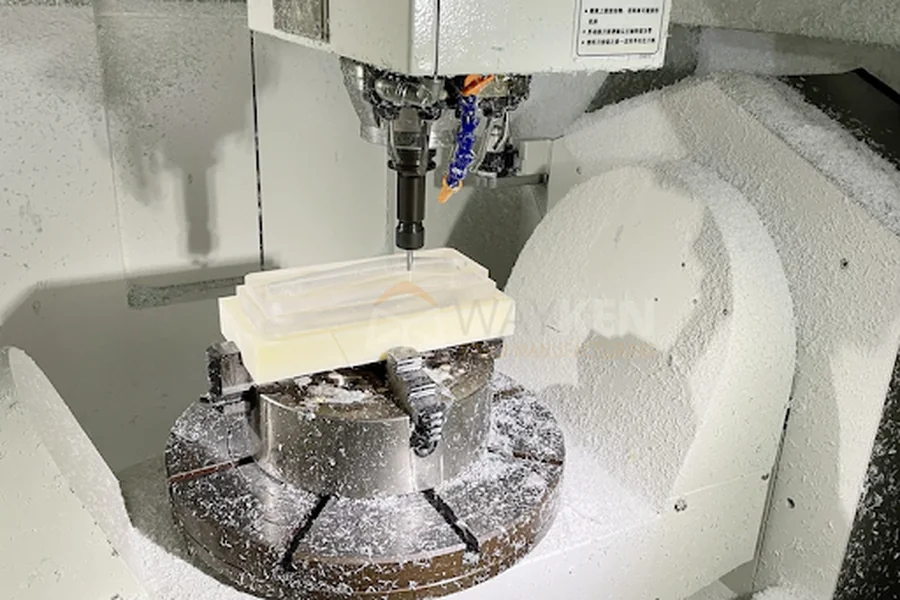
High-tech CNC drilling machines currently come equipped with adaptive control systems that regulate the feed rate and spindle speed to the reactivity of materials. This makes holes dimensionally accurate with no burrs. The types of drill bits that are used are not only decisive about accuracy, but also surface integrity. Examples include step drills that can create one-pass holes, leave less burrs, and parabolic flute drills to create easier chip evacuation in deep holes.
One more important area is Thread geometry. The type of thread to be used has to meet both the design and the production requirements. Rolled threads are usually superior to cut threads in fatigue uses as the work-hardened roots and smoother surface finishes prove beneficial there. Aerospace grade bolts are thread-rolled after heat treatment so that both dimensional integrity and mechanical strength is provided.
Durability Testing and Failure Mode Analysis
The true test of the reliability of the fastening system is effective validation under realistic conditions of operation. Aerospace and automotive requirements specify speedier durability tests to accommodate lifetimes of use within reduced periods of time. Joints are vibration characterized, thermally cycled, humidified, and exposed to degrading salt mists to recreate the effects of their combined mechanical and environmentally harsh conditions. These protocols detect strengths that are not apparent during the performance of static strength tests and cannot be ignored during accreditation of fastening integrity.
Failure modes may be at the weakest points- the root of the thread, the points of a joint, or across a hole. Free micro-slip, fretting and fatigue crack initiation wear are common problems. The type of thread used is also important in overcoming such threats. Fine-pitch threads provide a superior resistance to the loosening response in vibration, whereas coarse-pitch threads are used to provide a faster assembly and better engagement in softer materials. UNJ threads are used especially in aerospace applications due to increased fatigue life caused by the radiused roots.
Vital is hole preparation too. Incorrect selection of the types of drill bits can leave microstructural tears, delamination, or residual stresses that act as crack nucleation sites. Sophisticated non-destructive testing techniques such as ultrasonic analysis, phased-array scanners, and X-ray computed tomography enable engineers to identify sub-surface imperfections early to make sure that only those of structural integrity will reach assembly.
Conclusion
Fastening design in aerospace and automotive systems has become a complex optimization process balancing weight, strength, material compatibility, and durability. The proper type of thread ensures predictable stress distribution, while selecting the right types of drill bits guarantees clean, damage-free holes that preserve joint integrity. As vehicles and aircraft grow lighter with tighter performance margins, fastening optimization remains central to structural reliability and long-term system performance.