
Solar is growing. But not every building can handle the weight, shape, or stiffness of traditional systems. That’s where you need to look for flexible photovoltaic panels, they solve real-world problems.
If you’re considering rooftop solar for commercial buildings, especially with older structures or unique roof materials, you can’t just install any panel. The wrong choice might mean damage, cost overruns, or underperformance.
So, let’s break this down clearly, why these flexible solar panels are not just an option, but a smarter, lighter, and better-fit solution.
Traditional Panels vs. Flexible Panels: What’s the Gap?
Traditional solar panels are usually made from rigid silicon cells housed in glass. They’re effective. But also:
- Heavy
- Need complex mounting
- Only work on flat, strong roofs
- Costly to install and maintain
In contrast, flexible photovoltaic panels use thin film or layered materials to generate solar energy without the weight or stiffness. That means:
- Lighter weight (ideal for old or delicate roofs)
- No racking or drilling required
- Can bend and shape to the roof
- Work on metal, polycarbonate, and curved surfaces
This isn’t about sacrificing power for flexibility—it’s about making solar work where glass can’t.
Why Roof Type Matters More Than You Think
Not every building was built with solar power in mind. And definitely not for 20+ glass panels.
When it comes to rooftop solar for commercial buildings, we often see:
- Metal roofs that aren’t compatible with screws
- Bitumen or curved roofs that don’t support frames
- Lightweight structures where panel weight becomes a risk
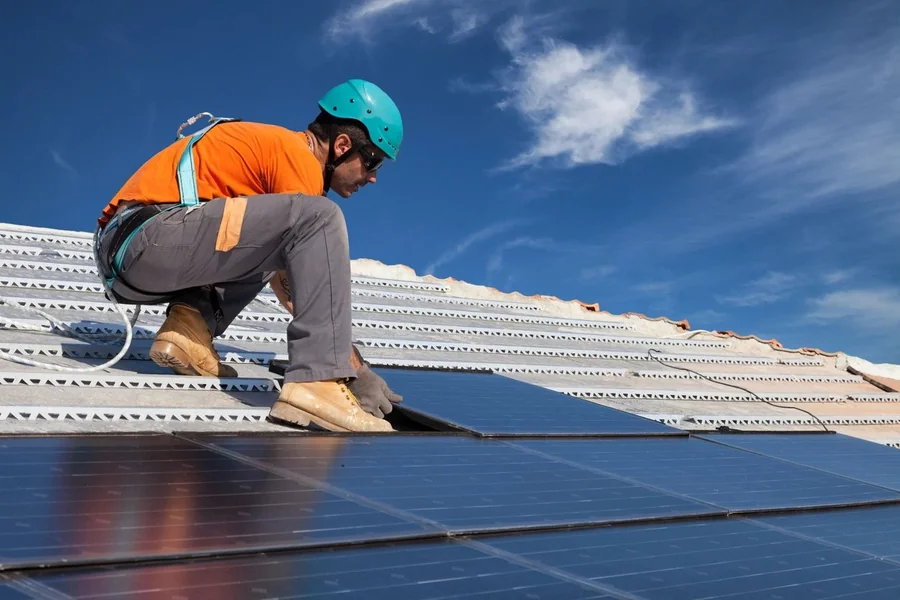
This is where flexible photovoltaic panels shine. Their low weight and structural adaptability avoid those issues completely. You don’t need to redesign your building. You just use smarter tech.
What to Look for in a Great Flexible Solar Panel
Choosing the right flexible panels isn’t just about bending. The market is flooded with options, but not all deliver the same long-term value. Here’s what truly matters:
Real Durability: Many flexible panels crack over time. Look for ones with microcrack-resistant layers that survive harsh weather and stay efficient.
Installation Simplicity: No one wants a 3-week mounting project. Panels that roll out or adhere directly save time and labor.
Compatibility with Roof Types: They should work on flat, sloped, curved, and lightweight roofs.
Certification & Testing: Certifications prove panels meet global standards.
No-Hazard Materials: Some panels use harmful adhesives or metals. Safer materials mean safer installs.
You can’t afford to guess on this. The right panel saves thousands, not just in energy, but in repairs, downtime, and retrofit headaches.
The Commercial Solar Gap: Why This Solution Fits
There’s a big problem in the commercial solar market: rooftop solar for commercial buildings still leans heavily on old, rigid panel models. That leaves out:
- Small businesses
- Lightweight structures
- Older rooftops
- Creative building designs
Flexible photovoltaic panels fill this gap. They’re not just thinner, they open solar access to buildings that were left out before. Businesses don’t have to change their buildings. They just need to choose smarter solar options.
Thinking of Getting Started?
If you’re serious about solar but know your building isn’t made for glass panels, you’re not alone. And you’re not out of luck.
The smart way forward is to:
- Check your roof type and weight limits
- Explore flexible panel options that meet global durability standards
- Work with a provider who understands commercial solar challenges and can customize the solution to your roof
There are companies already doing this right—designing flexible panels that cut weight, labor, and installation time in half. One of them offers solutions that have passed wind, fire, and environmental tests globally. (You might’ve seen their work with major automotive brands.)
Final Thought
Solar doesn’t have to be complicated, or heavy.
Flexible photovoltaic panels are proving that. For those considering rooftop solar for commercial buildings, especially on delicate or complex roofs, these lightweight, adaptable systems offer a better path forward.
Because the future of solar isn’t just powerful. It’s flexible, lighter, and made to fit real buildings, not just ideal ones.
FAQs.
1. My building has an older, metal roof. I want solar, but I’m scared it’ll cause damage. Will these panels really work?
Yes, absolutely. That’s the whole point of flexible photovoltaic panels, they’re made for roofs like yours. No drilling. No heavy frames. Just light, bendable panels that fit without hurting your structure. You don’t have to risk damage to go solar anymore.
2. I’ve been told my roof isn’t “solar-friendly.” Does that mean I can’t install anything at all?
Not true. It just means traditional glass panels won’t work well, but flexible PV panels change that. They’re lighter, thinner, and adapt to complex or curved shapes. Whether it’s a sloped, old, or delicate roof, there’s finally a solar option built for real-world buildings.
3. I want to install solar, but I can’t shut down my business for days. Will this take forever?
Not at all. One of the biggest perks of flexible solar panels is speed. No giant mounting systems or structural changes. Most installs take far less time than traditional panels—meaning less disruption, fewer delays, and faster savings.