

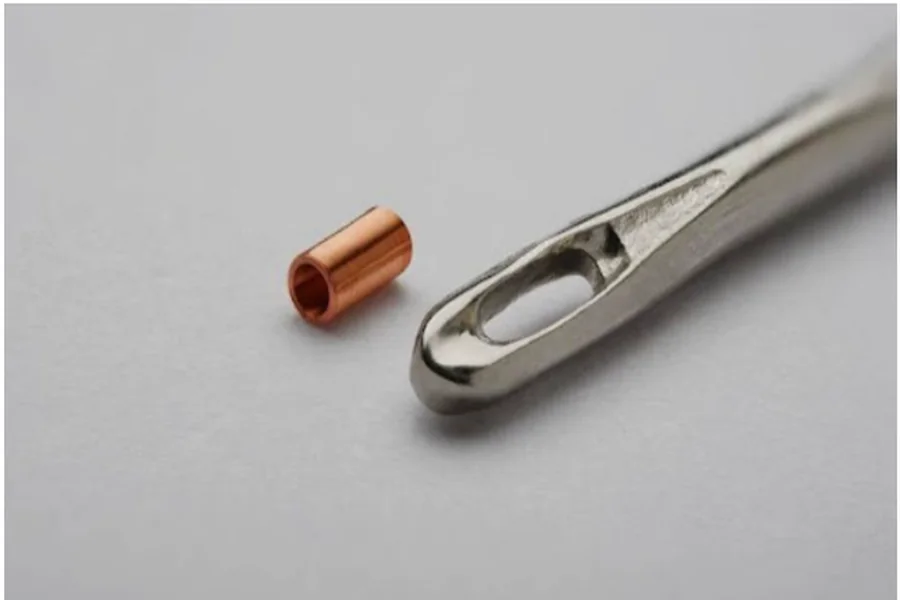
Miniaturization is one of the topological trends in contemporary medicine, where catheters, implants, and sensors continue to get smaller in size, all to reach places in the body that were previously inaccessible with minimum disturbance. There are, however, serious manufacturing problems that accompany this size reduction.
Professionals address these challenges by leveraging the latest advancements in robotic technology to manufacture micro coils, thereby providing a solid, reliable connection that is particularly important in the fields of medicine. The following article will elaborate on these challenges and how proposed robotics solutions will differentiate in terms of accuracy, scalability, and performance.
The Miniaturization Imperative in Medical Devices
Invasive medical devices inserted via catheters, minimally invasive procedures, or through implants must continually shrink to:
- Access previously unreachable body regions
- Minimize bodily disruption
- Reduce energy consumption
- Extend the operational lifespan of implants
To meet these goals, manufacturers need to embed components like micro coils, often smaller than a pinhead, with precise electromagnetic properties. But creating such miniature structures demands technologies that go far beyond traditional coil manufacturing
Robotic Technologies: Scaling Precision and Reliability
Mass production of micro coils and sensitive connections cannot be based on manual methods. Human interference affects it all: non-homogenous quality, decreased throughput, and possible breakage of sensitive parts.
Custom Robotic Solutions
Various solutions have covered this with its homegrown robotic technologies. These systems make automatic:
- Twisting of super-thin micro coils
- When ferromagnetic core materials are necessary to fill coils
- Exacting assembly and joining of elements
These robotic systems yield:
- Economic mass production—large quantities at low cost
- Safer processing—eliminates human risk to sensitive parts
- High repeatability—consistent component characteristics
- High quality—tight tolerances, no oxidation, better durability
- Automation excellence—reducing variations from worker skill levels
Medical Applications
Thanks to micro coil and robotic manufacturing capabilities, a range of critical medical uses is unlocked:
- Catheters and cardiac ablation tools: Micro coils enable electromagnetic navigation and ablation therapy in treatments for arrhythmia (e.g., cardiac ablation catheters)
Small implants & sensors:
- Diagnostics through the wireless linkage with implants recording physiological, glycemic, or fluid-flow parameters
- Rather, active implants, such as pacemakers in miniaturized form, or deep brain stimulators, etc.
- Electrophysiological treatment, RF, or microwave ablations are all therapeutics.
- Navigation & orientation, e.g, targeted drug delivery, Catheter positioning, stents, markers, and endoscopic devices
These uses benefit from the robustness, miniaturization, and precision that robotic‑enabled coil technology delivers.
Conclusion
Robotic technologies are changing the nature of micro-level components to be produced in the medicine industry. Integrating their in‑house automation in microcoil winding and thermo pressure bonding, they meet the mammoth task of producing ultra-fine components with high reliability as well as precision. The result is an enabling platform of many medical innovations, including diagnostic implants, active therapeutic implants, highly innovative navigation, and sensing applications.
This combination of robotic precision, miniaturization, and high-bandwidth connectivity delivers high-volume, reproducible manufacturing at cost-effective levels to drive the development of minimally invasive medicine that would have belonged to science fiction.