
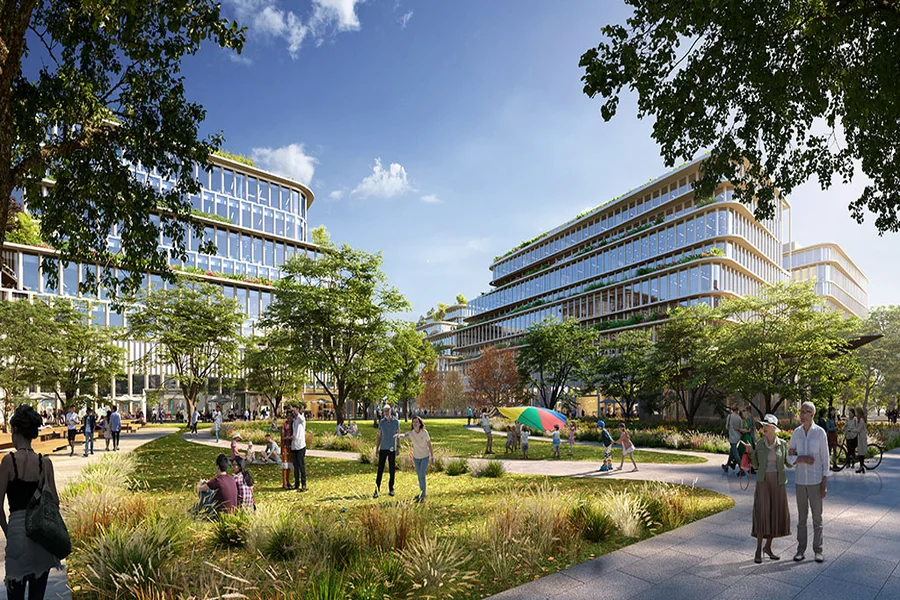
The rapid transformation of urban living now prioritizes synergy over segregation. Global cities across the world are now abandoning rigid, single-use zoning, embracing multi-functionality, hyper-connected, and high-density environments.
Besides creating a convenient environment to live, work, and play, these developments demonstrate how integrated design is associated with the enhancement of living standards and economic robustness.
In contrast to traditional zoning, multi-purpose hubs in global cities boost community interaction, support local businesses, and ensure commuting distances, with many future-led districts now adopting the “15-minute neighborhood” concept. This is expanding in global cities like London, Dubai, New York, Tokyo, and Singapore where planners are emphasizing future-ready urban strategies.
How an Integrated Lifestyle Hub Form?
Essentially, a mixed-use hub brings together multiple land uses under one umbrella or within one specified precinct. The holistic lifestyle of multi-functional destinations contrasts from traditional single-use zoning where each land use was separated from the other.
Multiple aspects of life start co-existing to create a more vibrant, cohesive, and walkable community.
In simpler words, modern urban residents appreciate a seamless experience towards life, work, and entertainment, while the mixed-use destinations address these demands by enabling:
- Minutes from everything and shorter travel times
- Business hubs and co-working spaces enveloped within one zone
- Dining, recreation, and cultural venues within a walkable distance
The convergence of above-mentioned lifestyle elements create urban places that remain operational 24/7 and buzzing with activity day and night.
Perks of Mixed-Use Destinations
Mixed-use lifestyle hubs are experiencing a rapid, worldwide expansion due to substantial advantages like:
- Ecological Incentives
With the work-life-play integration, commutes ultimately reduce. This lowers carbon emissions, while the increased focus on smart systems and green designs across several projects worldwide promote a more environmentally sustainable ecosystem.
- Pedestrian-Centric Living
Mixed-use developments make daily needs accessible by foot, creating a car-optional lifestyle.
- Economic Stability
Diverse offerings, from real estate to employment, unfold multiple revenue streams and support extensive employment opportunities.
- Social Vibrancy
Community engagement vastly upgrades cultural streets and public spaces.
- Investor Appeal
Occupancy and rental demand remain stronger and stabilized in integrated communities.
Premier Mixed-Use Lifestyle Centers
Integrated Lifestyle Hubs in Dubai: Cosmopolitan Urban Centers
Driven by demand for experience-oriented living and cutting-edge planning, this global hub has become a marquee for mixed-used destinations.
Dubai Festival City
This whopping hub covers 5.2 million square meters of land and promotes a “city-within-a-city” ecosystem. With a mix of lifestyle experiences, leisure destinations, corporate offices, and residential zones, it functions as one integrated destination.
Dubai Creek Harbour
The city’s newest waterfront marvel and a master-planned zone promises an unrivaled combination of culture, nature, and living. Diverse offerings, from retail and living towers to marinas and promenades, it sets a new benchmark in seamless experience centered around Dubai Creek and spanning six square kilometers.
Downtown Dubai
Anchored as the world’s most vibrant, integrated community, it attracts millions of visitors as well as investors. Its staggering retail landscape, top-of-the-line hospitality options, immersive office structures, and bespoke residential rises make it highly distinctive from other mixed-use developments around the world.
Dubai South
One of the world’s largest mixed-use zones, Dubai South is widely regarded as a mega-city built around the upcoming world largest DWC Airport. It is designed as a future-ready hub with plentiful options dedicated to industrial, retail, residential, and entertainment purposes.
Challenges Faced by Mixed-Use Lifestyle Hubs
The Balance of Scale and Livability
Integrated destinations typically cover massive land areas. These large-scale developments must balance density with contemporary facilities and green spaces. Such an equilibrium will ensure a human-oriented living rather than emerging as an overly commercialized space.
Infrastructure Coordination
Strategically planned mixed-use destinations prioritize utility integration woven with enhanced transport connectivity. Such a successful coordination demands significant upfront investment as well as planning.
Zoning or Regulatory Complexity
Global cities adapting to mixed-use community models demand unbreakable alignment between developers, urban policy makers, and community stakeholders. Additionally, zoning rules need to update with time to cater to diverse mix uses.
The Future of Integrated Lifestyle Hubs
Transit-Centered Developments
Metropolitan hubs are increasingly tying mixed-use pockets with transit hubs. This initiative is expanding with the growing demand for a sustainable environment, walkable lifestyles, and reduced carbon footprints.
Smart & Connected Destinations
The future of mixed-use developments emphasize the intertwining of energy-efficient buildings, IoT integration, real-time urban analytics, and AI-driven services. The future-forward systems are transforming the way of interaction between residents and their environment.
Closing In!
As the world is undergoing rapid transformation of urban living, the multi-functional communities are tremendously rising. This rise is a result of the modern demands revolving around sustainability, community dynamism, and convenience.
Cities are responding by fusing several functions into a cohesive landscape, including leisure spaces, cultural destinations, commercial hubs, and residential developments. Users and investors can witness this surge across Singapore’s and Tokyo’s growing lifestyle hubs to Dubai’s upscale Creek Harbour and Downtown zones.
Today, mixed-use lifestyle destinations leverage an integrated landscape where leisure, life, and work are enveloped together. This seamless marriage of multiple activities supports economic diversity, sustainability, and convenience.
As the world experiences population growth and lifestyle evolution, this trend will continue to shape the cities. It enables people to not just live, but connect, thrive, and experience the broad spectrum of urban life under one umbrella.