
Pharmacokinetics services have become one of the most influential catalysts in modern drug discovery, reshaping how biotech and pharmaceutical companies predict efficacy, reduce failure rates, and bring life-changing therapies to patients faster. At the Center for Biomedical Innovation (CBI), the integration of advanced pharmacokinetics (PK) methodologies with translational research has created a new model—one that transforms scattered experimental data into a cohesive, decision-ready roadmap for drug development. This approach shortens timelines, sharpens precision, and elevates scientific understanding across every stage of the discovery pipeline.
The New Reality of Drug Discovery: Speed, Accuracy, and Translational Insight
The drug development landscape has evolved dramatically over the past decade. Traditional workflows, once heavily dependent on sequential testing and late-stage insights, are now giving way to parallel, data-driven models that require rapid interpretation of complex biological responses. Companies are expected to demonstrate not only whether a compound works, but how, why, and in what patient populations it will work best.
This is where CBI’s strategy stands out. By embedding PK principles early in discovery—rather than waiting for clinical phases—the organization ensures that every hypothesis is supported by quantitative evidence. Instead of relying on intuition or isolated experiments, development teams use predictive modeling, advanced analytics, and translational biology to calculate real-world feasibility long before a molecule reaches human trials.
Why Pharmacokinetics Matters Earlier Than Ever
Pharmacokinetics is no longer limited to measuring how a drug moves through the body; it has become a critical lens for evaluating therapeutic potential from the very beginning. At CBI, scientists use PK insights to understand optimal dosing regimens, exposure–response relationships, absorption patterns, tissue distribution, and metabolic pathways before costly late-stage decisions are made.
These insights help determine whether a drug candidate has the characteristics needed to achieve therapeutic concentrations at the target site, how long it should remain active, and what safety concerns might emerge. In many cases, early PK data can reveal that a molecule requires structural modifications or alternative delivery strategies, saving years of development time and millions in R&D investments.
CBI’s model integrates these findings with real-time computational predictions, enabling researchers to simulate clinical scenarios long before clinical trials begin. When paired with translational research, PK becomes a powerful tool for linking molecular data to patient outcomes.
Translational Research: The Bridge Between Bench Science and Human Biology
Translational research at CBI is designed to close one of the biggest gaps in drug development: the disconnect between animal data and human physiology. Even the most promising preclinical results can fail in clinical settings if early research cannot accurately predict human responses. By integrating translational biomarkers, humanized models, and AI-driven analytics, CBI turns PK findings into actionable clinical insight.
This approach creates a continuous loop of learning. Preclinical studies generate PK and pharmacodynamic (PD) data, which are translated into computational models predicting human outcomes. Those predictions guide new experiments, which generate further data, refining the models again. Instead of a one-direction pipeline, CBI builds a feedback-driven system where each phase informs the next.
The result is a more reliable path to first-in-human studies. Companies can design clinical trials with greater confidence, understanding likely dose ranges, therapeutic windows, and safety considerations before a single patient is enrolled.
AI, Modeling, and Simulation: The Engines of Acceleration
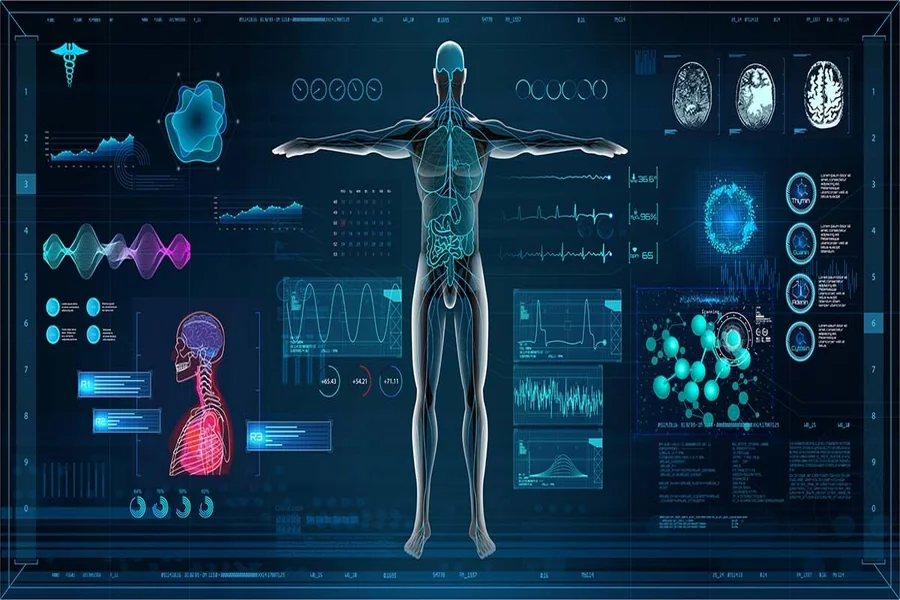
The future of drug discovery is computational, and CBI is at the forefront of this evolution. Physiologically based pharmacokinetic (PBPK) modeling, AI-enhanced prediction tools, and nonlinear mixed-effects modeling now support nearly every decision researchers make. Instead of running dozens of physical experiments to answer a single question, scientists can simulate exposure levels, metabolic pathways, drug interactions, and toxicity outcomes within hours.
This advanced modeling creates a multidimensional view of how a drug behaves—far beyond traditional PK curves. Researchers can model how a compound will act in specific patient subsets, including pediatric populations, the elderly, individuals with comorbidities, or patients with rare metabolic profiles. Such personalized insights are invaluable for designing targeted therapies and precision medicine strategies.
By merging these computational tools with biological data, CBI shortens the journey from initial concept to optimized clinical candidate. Molecules that once took years to validate can now be assessed with high confidence early in discovery, dramatically improving R&D efficiency.
The CBI Advantage: Integration, Collaboration, and Scientific Rigor
What distinguishes CBI is not just its technology but its philosophy. Drug discovery is treated as a unified system—not isolated departments working in silos. Pharmacokinetics experts collaborate directly with medicinal chemists, toxicologists, clinicians, and computational biologists. Every dataset, no matter how early, becomes part of a larger mosaic that guides decision-making.
This level of integration yields smarter candidate selection, faster iteration cycles, and clearer go/no-go decisions. Companies partnering with CBI benefit from a streamlined pipeline where redundancies are eliminated, and uncertainty is reduced at every stage.
Moreover, CBI’s commitment to scientific rigor ensures that all predictions are grounded in validated models and experimental evidence. The outcome is a development environment where innovation is accelerated without compromising safety, accuracy, or regulatory readiness.
Conclusion
Pharmacokinetics services and translational research have emerged as essential pillars of next-generation drug discovery. At CBI, these disciplines converge into a powerful framework that accelerates timelines, enhances clinical predictability, and transforms how new therapies are brought to the world. By combining advanced modeling, early PK integration, and translational insight, CBI is redefining what it means to innovate in biotech and pharmaceuticals—ensuring that promising ideas become effective treatments with greater speed, confidence, and scientific clarity.