
Most businesses know they need video content. But knowing it and actually making good videos are two different things. A bad video can hurt a brand worse than having no video at all. That’s why more companies are turning to professional video production services instead of trying to figure it out themselves.
The shift toward video isn’t slowing down either. Every major platform now prioritizes video over text and images. Facebook, Instagram, LinkedIn, YouTube, and even Google search results favor video content. Brands that ignore this trend fall behind fast.
Why commercial video production matters for brands
A good video grabs attention in the first three seconds. That tiny window decides whether someone keeps watching or scrolls away. Commercial video production focuses on making those opening moments count, because everything else depends on them.
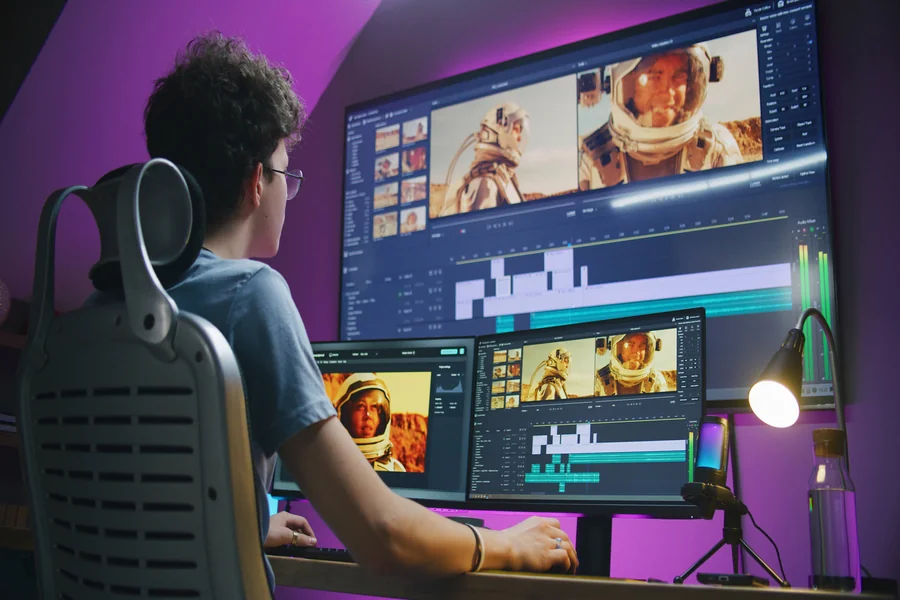
There’s a full process behind every finished video. A scriptwriter shapes the message. A director plans each shot. Camera operators capture the footage. Editors piece it together and add music, graphics, and color grading. Each step matters and each one requires someone who knows what they’re doing.
Brands that work with a commercial video production company get content designed for a specific purpose. It could be a product launch video, a brand story, a customer testimonial, or a paid social ad. The video isn’t just pretty to look at. It’s built to perform.
One finished video can be chopped into smaller clips for different platforms. A 90-second brand film becomes a 15-second Instagram reel, a 30-second YouTube pre-roll ad, a square clip for Facebook, and a thumbnail for email newsletters. That single production investment feeds content calendars for months.
The return on commercial video production shows up in real numbers. Landing pages with video see higher conversion rates. Social posts with video get more shares. Email campaigns with embedded video get more clicks. The data backs it up consistently.
How 3d video animation fills the gaps cameras can’t
Some products are almost impossible to capture on camera. Maybe the item is microscopic, the process happens inside a sealed machine, or the product hasn’t been manufactured yet. That’s exactly where 3d animation video steps in.
A 3d animation video shows things that live cameras simply can’t capture. Viewers can see a product from every angle, zoom into tiny components, and watch internal mechanisms move in real time. It takes abstract or invisible concepts and makes them visual.
Industries like healthcare, tech, real estate, manufacturing, and education rely on 3d video animation regularly. A medical device company can show how an implant sits inside the body. A tech startup can demonstrate software that hasn’t launched yet. An architecture firm can walk clients through a building that only exists as blueprints.
Businesses searching for a 3d animation video maker should look at the team’s past work first. Industry experience matters. A team that’s made animations for automotive clients won’t automatically know how to visualize pharmaceutical products. The best 3d animation teams ask questions about the audience, the goal, and the distribution channels before starting any project.
Learning how to make 3d animation video also gives businesses a better understanding of what to expect from vendors. The process involves modeling, texturing, lighting, animating, and rendering. Each phase takes time, so realistic timelines usually run four to eight weeks depending on complexity.
Mixing live footage with animation for stronger results
Some of the best marketing campaigns combine real footage with 3d animation in the same video. A person talks about a product on camera while animated graphics show how the product works behind the scenes.
This hybrid approach keeps viewers watching longer because the visual format keeps changing. It breaks the pattern of a standard talking-head clip and gives the audience two reasons to stay engaged. The human element builds trust. The animation delivers clarity.
Product launch videos benefit the most from this combination. The founder or CEO introduces the product in person, then the video transitions into a 3d breakdown showing features, materials, and functionality. Viewers get both the personal connection and the technical detail in one piece of content.
Picking the right production partner
Choosing a team for video and animation isn’t something to rush. The wrong partner wastes time and money. A few things matter more than the rest when making this decision:
- A portfolio with projects similar in style and quality to what the brand needs
- A clear production process with defined milestones and revision rounds
- Experience handling both live-action shoots and 3d animation under one roof
- Transparent pricing with no surprise costs during post-production
Teams that manage video production and animation together keep the visual style consistent across every deliverable. When two separate vendors handle these tasks, the colors, pacing, and overall feel often clash.
What it comes down to
Video production services and 3d animation services are standard tools for brands that take their marketing seriously. They explain products faster, build trust with audiences, and keep attention across every digital platform. Companies that invest in both give themselves a content advantage that text and static images simply can’t match. Brands that skip video don’t just miss an opportunity. They hand it directly to their competitors.