
The software testing market is growing and is already valued at billions of dollars. The latest data indicates that the trend will continue and the share of the sector will reach unprecedented levels. The large-scale increase is accompanied by significant improvements and modernization. Traditional testing is no longer a solution for many companies. Since software has become more complex, organizations are resorting to new progressive methods of evaluating digital products.
One of the primary mainstreams is the use of artificial intelligence (AI). It is a modern tool that is revolutionizing the industry and investing in its qualitative development. What methods it uses and what special advantages it has, you will learn below.
What Is AI in Testing and What Methods Does It Use?
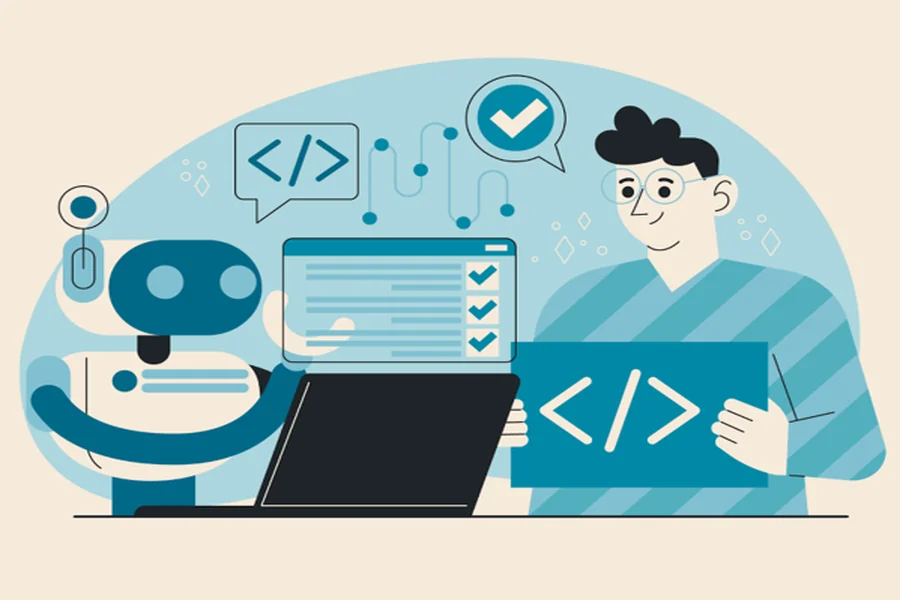
Artificial intelligence is an innovative development that has touched most industries. It is a software tool that copies human thinking and can partially replace human labor. In testing, AI is one of the automation approaches that helps in creating test cases, executing them, and speeding up the overall process.
However, unlike automation, AI has much greater capabilities. While automation requires more human participation, artificial intelligence has the ability to progress without additional settings or interventions. Here is a brief overview of the methods that AI uses to improve testing:
- Machine Learning. It is the basis of artificial intelligence that can independently analyze data and generate new cases. In addition, it is able to prioritize areas of testing and detect the smallest anomalies that can cause failures over time.
- Natural Language Processing. It actually blurs the lines between human language and machine understanding. It allows AI to analyze human feedback without further processing and generate both cases and reports.
- Computer Vision. It has found its widest application in testing graphical interfaces. It performs visual testing and adapts it to changes, revealing the most subtle details that can affect the customer experience.
The use of AI requires skills. Therefore, it may make sense to involve third-party specialists. Here you can find out more information about the testing approach and get acquainted with the services offered on the market.
Significant Benefits of Using Artificial Intelligence
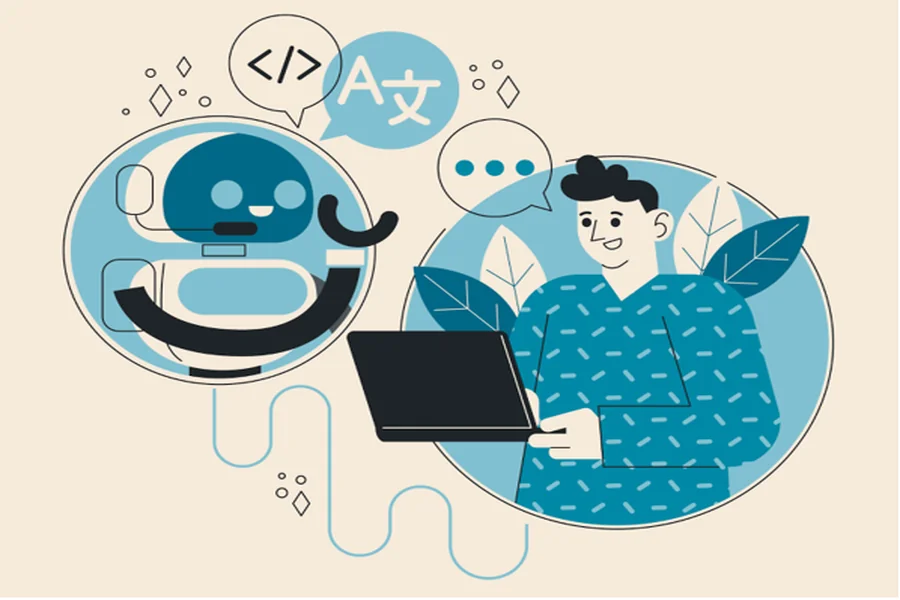
AI can rewrite scripts without human intervention and dynamically change cases according to the environment update. Together, this speeds up the process and contributes to the release of defect-free software. However, these are not the only advantages of using it. Let’s analyze the main benefits that it brings to the industry:
- Increases efficiency. Artificial intelligence in testing automates and optimizes a large number of processes. Thanks to this, it provides quick feedback, reduces the burden on the team, and improves its productivity.
- Reduces costs. The initial investments for using artificial intelligence can be essential. However, in the long run, they will decrease and even bring savings. Since you can release the product faster, you can get profits earlier.
- Expands coverage and increases accuracy. AI can simulate hundreds of test scenarios in just a few hours, avoiding errors that are often inherent in humans. As a result, you get maximum reach and the most accurate end data.
- Improves customer experience. Software tested by both humans and AI is often faster, more functional, and more accessible to users. This helps businesses get better feedback and more trust.
AI-based testing reduces the need for manual testing. At the same time, it improves workflows within the company and has a significant impact on user satisfaction.
Future Trends in the Use of AI Technologies in Testing
One of the main questions that worries specialists is whether AI will eventually replace human labor and whether it will deprive them of their jobs. Considering the specifics of the tool and the challenges it faces, the answer will be negative. Artificial intelligence is a product of human development. However, it is not able to replace people completely. Therefore, there is no reason to panic. You should perceive AI as an assisting approach that can facilitate your work and make it better.
Here are the main future trends that we can expect:
- The emergence of more automated systems. Over time, tools can improve and reduce the number of errors, along with better simulation of real conditions.
- Changing the role of testers in the process. With the development of AI, only the best companies will rarely use a manual approach to testing and will focus on teaching and training artificial intelligence.
- Strengthening the competitive advantage for business. The final software will have fewer bugs and can be updated and released more frequently, opening up greater potential for business development.
In summary, AI is a new era in testing that opens up new business opportunities and meets user expectations. It involves modern developments and technologies, stimulating the progress of the industry in line with market needs.