

Self-installed home security has passed professional installation for the first time on record. SafeHome.org’s 2026 Home Security Market Report surveyed 2,435 U.S. adults and found 49% of alarm system users installed their current system themselves, against 42% who hired a professional.
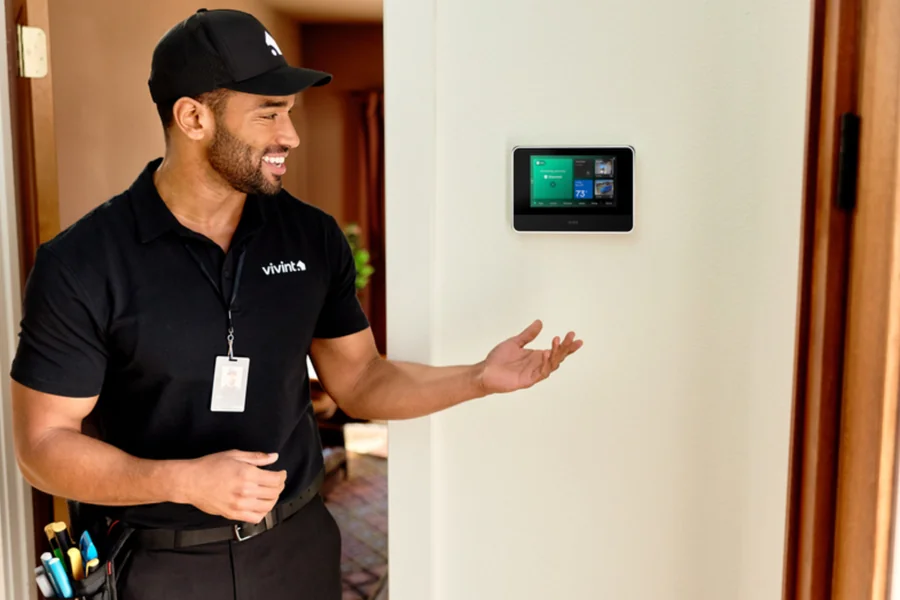
Vivint sits on the other side of that split. It’s a smart home security company that designs its own hardware, software, and monitoring platform, then installs the system professionally instead of shipping components for a homeowner to assemble.
The DIY shift skews young, with SafeHome.org reporting that 54% of adults 18 to 29 and 55% of those 30 to 44 installed their own systems, compared with 38% of adults 60 and older. 12% of users also delayed a system upgrade in the past year over cost, and professional monitoring ranked ninth among 12 factors buyers weigh before purchasing. Convenience and price explain most of that shift toward DIY. What the numbers don’t explain is what a homeowner gives up, or gains, once professional installation is off the table.
DIY’s Convenience, and Its Blind Spot
Self-installation removes the scheduling wait, the technician visit, and the upfront labor cost. A sensor kit or camera shows up, and the homeowner sets it up on their own timeline, in whatever order the instructions suggest.
That convenience carries a cost the purchase price doesn’t show. Parks Associates’ Smart Home and Security Market Tracker found that 52% of DIY smart home users report setup or connectivity issues. Those issues tend to surface after the sale, when there’s no technician to call and no installer who already knows the home’s Wi-Fi dead zones or wall construction.
The problem compounds once devices come from more than one manufacturer. 57% of security dealers now say integrating a customer’s existing smart home devices with a security system is difficult, up from 44% in 2022, according to Parks Associates. A camera from one brand, a lock from another, and a hub from a third can each work fine alone. Getting them to work together as one system, instead of a shelf of gadgets that happen to share a Wi-Fi network, is a different problem entirely.
Owning the Stack, in Practice
Vivint designs its hardware, firmware, and monitoring platform as one system, instead of assembling it from parts after the devices have already shipped.
A single manufacturer accountable for the whole stack means one support line when something breaks, not three separate customer service queues for three separate brands. It also means the sensors, control panel, and monitoring center share one design from the start, instead of being stitched together after separate purchases. A firmware update can reach every connected device at once, because the company that wrote it also built the hardware it runs on.
Installation is where the difference shows up first. A trained installer walks a property and places cameras and sensors based on sightlines, entry points, and blind spots a homeowner has little reason to know to check. A self-installed camera, by contrast, typically goes wherever an instructional video or a box diagram suggests, with no one confirming afterward whether that spot actually covers what matters.
Vivint builds that judgment into every install. A Vivint Smart Home Pro designs the system layout with the homeowner, then walks the property on arrival to confirm placement and coverage before mounting anything, and tests the full system before leaving.
A Trade-off, Not a Verdict
DIY installation isn’t the wrong choice for every household. It fits homeowners who are comfortable troubleshooting their own network, don’t mind mixing brands across a system, and want something running the same afternoon it arrives.
Professional installation fits a different priority. A single company handles design, installation, and monitoring, so the setup friction and cross-brand integration work gets resolved before the system goes live, not discovered afterward. A device solves one job on its own. A system is built so every part works from the same design.
Each approach solves different problems for different households, and SafeHome.org’s data shows more households are now choosing to solve the setup problem themselves. That data measures which option is faster to set up. It says nothing about which one holds up better after years of ownership.