
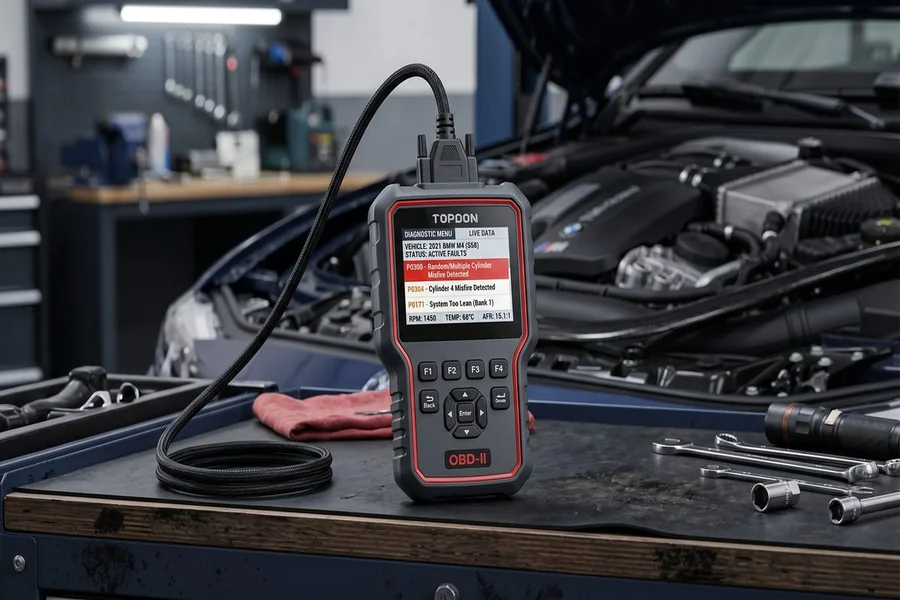
A P0420 code and a P0171 code on the same vehicle often share the same evidence, which is oxygen sensor data. The upstream sensor tells the engine control module (ECM) how much oxygen is in the exhaust before the catalytic converter, and the ECM uses it to set fueling. The downstream sensor tells the ECM how much oxygen is left after the converter. Reading both sensors together shows whether the engine is truly lean, whether the converter is working and which repair should come first.
What Each Oxygen Sensor Does
Each sensor has a different job, and the ECM uses them for different decisions. Knowing what each one should look like makes a bad pattern easy to spot.
Upstream sensor (sensor 1)
On narrowband sensors, voltage switches between low (lean) and high (rich) as the ECM moves the mixture around the ideal ratio. Many newer engines use wideband air-fuel ratio sensors instead, which report a current or lambda value rather than switching. Either way, this sensor drives fuel trim.
Downstream sensor (sensor 2)
A working converter stores oxygen and smooths out the swings, so the downstream sensor should show a fairly steady signal. When the converter loses oxygen storage capacity, the downstream signal starts to switch like the upstream one. The ECM compares the two and sets P0420 when they look too similar.
How a Lean Condition Shows in Sensor Data
A lean condition shows up first at the upstream sensor and then in the fuel trims. It can also change what the downstream sensor reports.
When bank 1 runs lean, the upstream sensor reports extra oxygen, and the ECM adds fuel. Short-term and long-term fuel trims go positive. If the ECM reaches its correction limit and still sees a lean mixture, it sets P0171.
A lean exhaust stream also carries more oxygen through the converter, so the downstream signal may drop and become less steady. The ECM can read that as poor oxygen storage, even when the converter is in good condition. This is why a P0420 that appears alongside P0171 should not be treated as a converter failure until the lean condition is fixed.
Reading the Two Sensors Together
Hold the engine at a steady 2,500 rpm or a steady cruise and graph both sensors with fuel trims. The patterns below cover the most common results.
| Pattern | What it suggests |
|---|---|
| Upstream active, downstream steady, trims normal | Healthy converter and mixture |
| Upstream mostly lean, trims high positive, downstream low | Real lean condition, fix P0171 first |
| Upstream and downstream switching together, trims normal | Converter oxygen storage is worn |
| Upstream reads lean but no intake leaks or fuel faults found | Exhaust leak ahead of the sensor, or a slow sensor |
| Downstream erratic with sharp lean dips | Exhaust leak near sensor 2 |
Common Causes Behind Both Codes
Several faults can set both codes at once. Check these before you decide the converter has failed.
- Exhaust leaks at the manifold, flex pipe or gaskets, which pull in outside air and make the sensors read lean
- Vacuum leaks that cause a real lean condition and long periods of lean running
- A mass airflow (MAF) sensor reading low, so the ECM supplies too little fuel
- Low fuel pressure or restricted injectors on bank 1
- A slow or contaminated upstream sensor that no longer reports the mixture accurately
- Ongoing misfires that send unburned oxygen to the sensors and unburned fuel into the converter, where it can overheat the catalyst
A Test Order That Avoids a Wasted Converter
This order fixes the mixture first and checks the converter last. It keeps a good converter from being replaced.
- Review freeze frame data for both codes, noting load, rpm and fuel trims.
- Check for exhaust leaks ahead of each sensor.
- Smoke test the intake and check fuel pressure.
- Check upstream sensor response by snapping the throttle or adding propane and watching for a fast rich swing.
- Repair the lean cause, clear the codes and let fuel trims relearn.
- Recheck downstream sensor activity before you condemn the converter.
Confirm the Repair
After the repair, the upstream sensor should respond quickly, fuel trims should sit inside the manufacturer’s range and the downstream signal should stay steady during cruise. Drive the vehicle through the catalyst monitor enable conditions and confirm the monitor completes before returning it to the customer.
What This Means for Your Shop
Catalytic converters are one of the most expensive emissions parts a customer pays for. Reading both oxygen sensors with fuel trims takes a few minutes and makes sure the converter is replaced only when the data proves it has failed.
Check Known Fixes Before You Order a Converter
Identifix Direct-Hit® lists confirmed fixes by make, model and engine. Look up P0420 and P0171 on the exact vehicle to see whether an exhaust leak, intake leak or sensor repair has fixed the same pair before, then confirm the fault with the oxygen sensor tests above.