
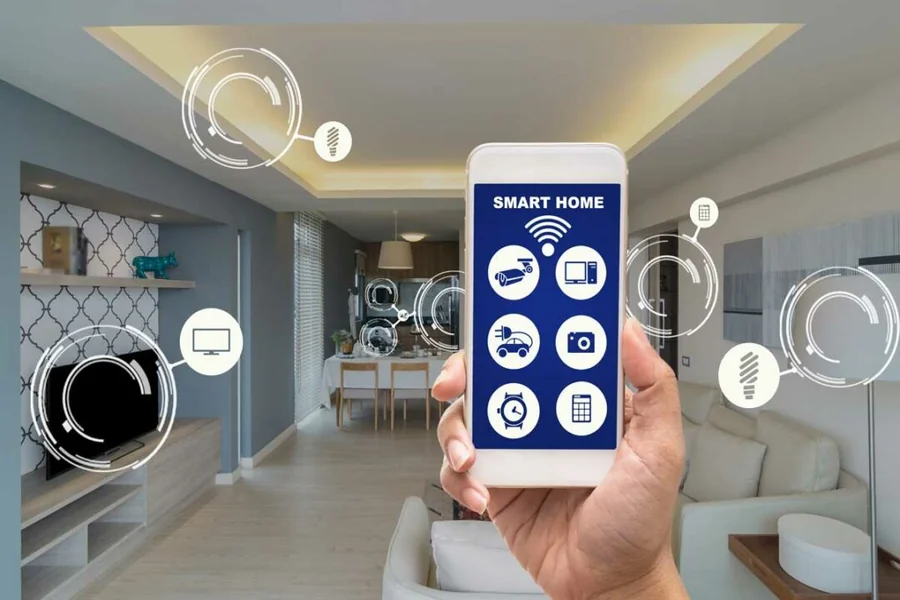
By mid-2026, 86 percent of Australian households had adopted at least one smart home product. From automated climate controls to Wi-Fi-enabled security cameras, the modern home is more connected than ever. The average Australian household budget for smart home upgrades has now surpassed $3,500, elevating the financial risk associated with electrical hardware damage. However, this growing reliance on continuous internet connectivity brings a significant vulnerability. When a brief power drop takes your router offline, integrated voice assistants and security networks can instantly fail or require tedious manual resets. Protecting this technology is no longer just about convenience. It is a critical step in preserving your investment and maintaining daily productivity.
The Hidden Dangers in Your Electrical Grid
Australians are no strangers to severe weather and grid instability. Recent data indicates that urban customers on the National Electricity Market experience an average of 1 to 1.5 unplanned power outages annually, while rural households face three or more. To mitigate these risks, arranging a professional UPS system installation is becoming a priority for tech-reliant households. In November 2026 alone, severe electrical storms across southeast Queensland unleashed roughly 120,000 lightning strikes, severing electricity to more than 81,000 homes. Furthermore, outages caused by severe weather disturbances in Australia frequently take between 10 and 25 hours to fully resolve, leaving unprotected home-based businesses completely offline for full working days.
Many homeowners assume that standard power boards are enough to keep their home offices safe. However, consumer advocacy group CHOICE points out that less dramatic power fluctuations happen constantly and gradually weaken electronic components over time. These micro-fluctuations degrade the sensitive microprocessors inside expensive routers, smart speakers, and home servers until they eventually fail.
Why True Resilience Requires Professional Solutions
Surprisingly, between 60 and 80 percent of all power surges actually originate from inside the property. Heavy appliances like air conditioners and pool pumps create tiny, invisible surges every time they cycle on and off. Standard plug-in surge protectors wear out silently over time and lack the battery backup required to keep security networks online.
If you run a home business or rely on expensive automation, true network resilience goes beyond a trip to the hardware store. The rollout of the Federal Government’s Cheaper Home Batteries Program has rapidly increased the volume of complex energy management systems connected to residential grids, requiring more sophisticated protection. Relying solely on basic consumer-grade strips leaves critical investments dangerously exposed to sudden voltage drops. Proper protection ensures that everything from critical data servers to high-end home security systems safely shuts down or stays online during an outage, preventing catastrophic data loss and hardware damage.
Essential Strategies for a Resilient Tech Setup
The Australian Energy Market Operator expects national electricity demand from data centres to grow seven-fold over the next decade, adding unprecedented strain to the national power grid. With such significant external pressures on electricity reliability, you need a proactive plan to secure your digital infrastructure. As you read up on new smart home devices and top gadgets to enhance your daily life, consider exactly how they will handle an abrupt loss of electricity.
To effectively future-proof your setup, consider these practical steps:
- Audit your critical devices: Identify which electronics need continuous power. Your Wi-Fi router, security cameras, and main work computer should take priority over secondary entertainment devices.
- Separate heavy appliances: Keep power-hungry motors like refrigerators and portable heaters on entirely different circuits than your sensitive home office equipment.
- Invest in battery backup: Deploy dedicated uninterruptible power supplies for any hardware that requires a safe shutdown sequence, such as a network-attached storage drive.
- Check voltage tolerances: Ensure that any new smart energy management systems, including solar inverters, have built-in safeguards against sudden voltage spikes.
Replacing a smart solar inverter damaged by a single power surge can cost an Australian homeowner between $1,500 and $3,000, while replacing fried smart HVAC controllers frequently exceeds $800. Furthermore, the lost productivity and potential data corruption incurred during these outages can easily dwarf the cost of the hardware itself. Protecting your equipment from the outset is far more cost-effective than dealing with the aftermath of an unexpected electrical event. By understanding the vulnerabilities of your smart home and taking steps to provide clean, consistent power, you can enjoy your modern tech setup with complete peace of mind.