
“AI video” now names two machines that share almost nothing. One watches footage that already exists. The other has to invent a scene that did not. Mixing them is how a creator buys a dashboard meant for a loading dock, and how a security team gets sold a prompt box.
Video analytics, the kind that sits on cameras, turns a stream into events. Object detection, tracking, metadata, a search box that can find “person at the gate after 22:00.” The camera is a witness.
The model’s job is to reduce hours of pixels into something a human can judge.
Generative video is the opposite direction. There is no gate. There is a sentence, a still, a chapter. The job is to produce a clip that can be posted. If that clip is supposed to come back next week with the same lead, you do not need a smarter motion detector. You need a production pipeline with records.
This article is the second machine. It is not a surveillance explainer, and it is not a promise that a generator will replace a crew.
From a prompt to a scene is not “understanding”
Older consumer tools treated generation the way old cameras treated motion: something changed, so it must be interesting. A new jacket, a new street, a new jawline, the pixels moved. That is not a story. It is noisy with lighting.
A usable drama pipeline does what analytics did when it stopped alerting on every shadow. It classifies. It keeps identity attached across frames on purpose. It stores structure so the next search or the next episode does not start from raw chaos.
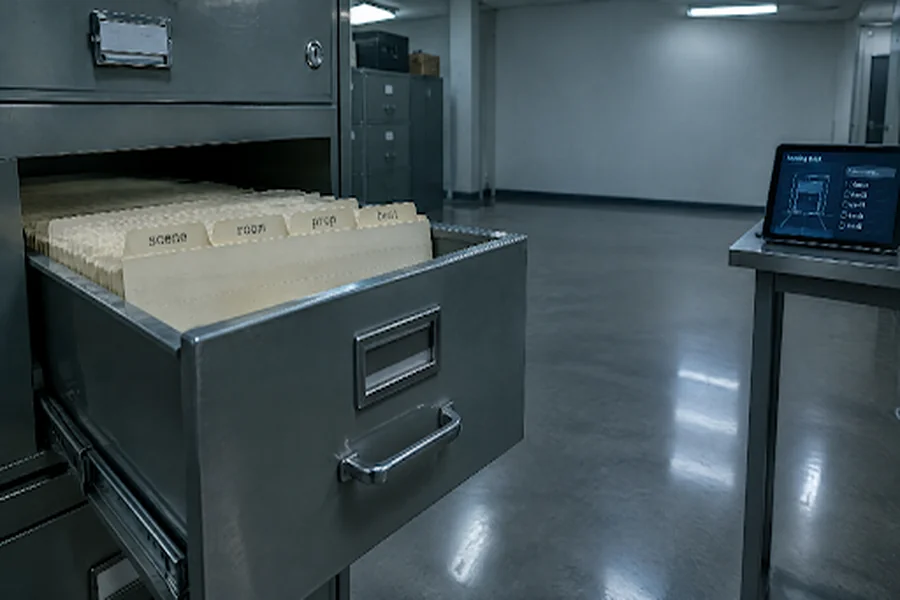
In analytics, that structure is metadata: who, where, when. In episode work, the equivalent is boring and necessary: whose scene this is, which room, which prop, which beat, which line. If those facts live only in a chat scroll, episode two is a different show. The model did not fail at “cinema.” You failed at filing.
Human review stays in both worlds. An analytics alert is a probability, not a verdict. A generated face is not a person you hired. Neither system should be allowed to take a consequential action: a lockout, a public accusation, a published episode without someone looking.
What happens after the idea is captured
Analytics starts when a camera writes frames. Generation starts when someone writes a premise. What happens next decides whether you get information or a slot machine.
First, prepare the input. A dark, crooked still is as bad for a drama beat as a smeared lens is for detection. One chapter of a novel is a unit. An entire book pasted into a box is not. Say the frame: 9:16 for a phone episode. Say the length of the first piece. A teaser with a handful of beats is finishable. A feature is not a first export.
Next, detect the parts that must stay stable. In a camera system that means people and vehicles. In a series that means the lead, the apartment, the coat. Create those records once. Attach one look. If two references disagree between two haircuts, two kitchens will generate the difference.
Then track them. Analytics associates a person across thirty frames so they are not thirty strangers. A drama desk has to associate a character across thirty shots so they are not thirty extras. Storyboards exist so you can fail the order before you pay for motion.
The output is not “a video.” It is a version attached to an approved beat, sitting next to the outline that justified it. Count accepted scenes, not files in Downloads.
Why a desk beats a single generate tab
Generic AI video tools start from a prompt and return a clip. Fine for a skyline that never returns. Weak for romance, revenge, workplace, or fantasy micro-drama that has to be recognizable from scene one to scene eight.
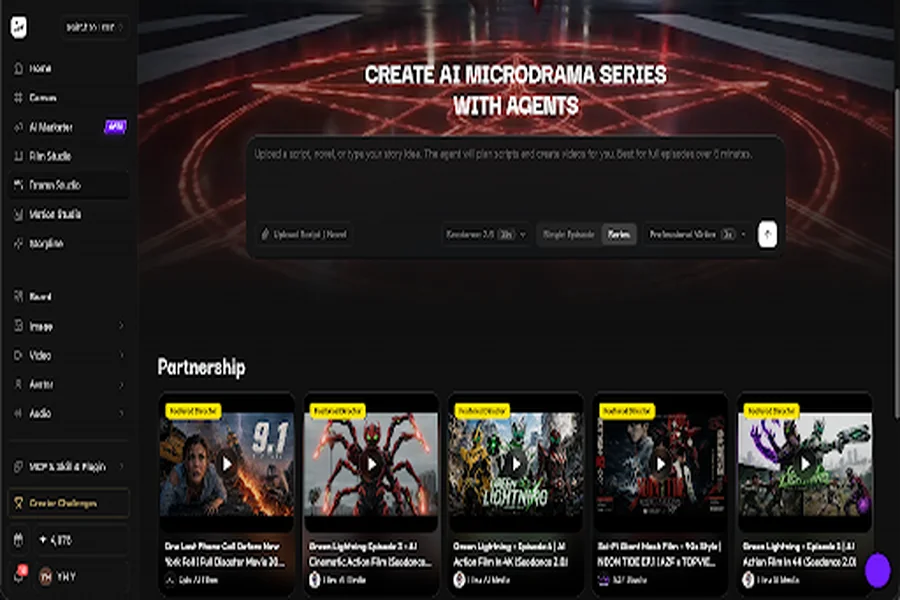
Drama Studio is built as that records layer: start from a one-line idea, an outline, a script, a novel chapter, or a serialized concept. An agent helps plan direction and next tasks. A workbench stores editable outlines, episodes, characters, locations, props, scripts, and beat sheets so the bible does not vanish when the thread scrolls.
You review, then storyboard, then move approved beats into episode production prompts, references, versions, continuation, post, export in one project. Voice and captions can live there too. Continuity improves when the board exists first. It is not a guarantee if you ignore it.
This is not an analytics platform. It does not search parking lots. It does not replace access control, and it does not replace a lawyer. It also does not replace a video model: when a beat has to last as a scene, you still generate, then watch. Do not rank a desk against a model as two “AI video” products.
Use the desk when Tuesday has to look like Monday. If you only needed one postcard, say so and skip it.
Edge cases, privacy, and what not to automate
Analytics people argue about edge versus cloud. Drama people argue about whether to generate before the outline is signed. The cheaper mistake is the same: send everything downstream because the button was available.
Keep rights with the stills. Do not upload a face you cannot show. Generated performers are not testimonials. Captions you approve still beat text you did not read. Credits are studio time.
Privacy in analytics means retention, access, and searchable archives of real people. Privacy in generation means not training your next episode on someone else’s likeness and not publishing a fake confession. Different risks. Same rule: start from a specific problem, one episode question, one relationship move, one cliffhanger not from “we should use AI.”
Measure whether the pipeline actually reduced rework: fewer recasts of the lead, fewer rooms that change colour, fewer beats that only make sense with a voiceover. If it did not, change the records, not the slogan.
AI video analytics works by turning cameras into an information system. An episode pipeline works by turning a story into files a human can fail before the audience does. Keep those machines apart. Use Drama Studio when the show has to come back. Post the cut you watched.