

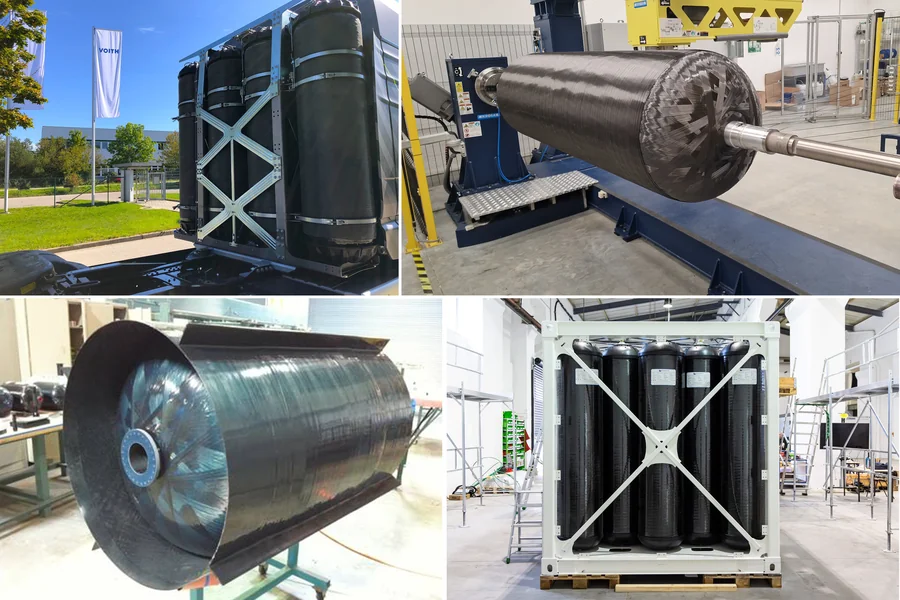
Automation has become a major force in the FRP sector and will continue to drive greater efficiency, better consistency of products, and larger-scale manufacturing by companies. The growth in demand for corrosion-resistant, lightweight products from various sectors, including construction, infrastructure, and industrial, is driving the need for automated FRP systems to support modern manufacturing practices.
Modern automated systems integrate advanced controls for fiber placement, resin impregnation, and curing, ensuring stable processes and repeatable results across production cycles.
Why Automation Is Essential in FRP Manufacturing
This article describes some of the most effective automated systems currently available for producing FRP in 2026 with respect to solutions that provide precise control over the process, reliable operation, and high-volume, cost-effective production.
The use of appropriate automation technologies provides a means to significantly reduce labor costs, reduce waste, and consistently produce to established production standards.
Composite-Tech
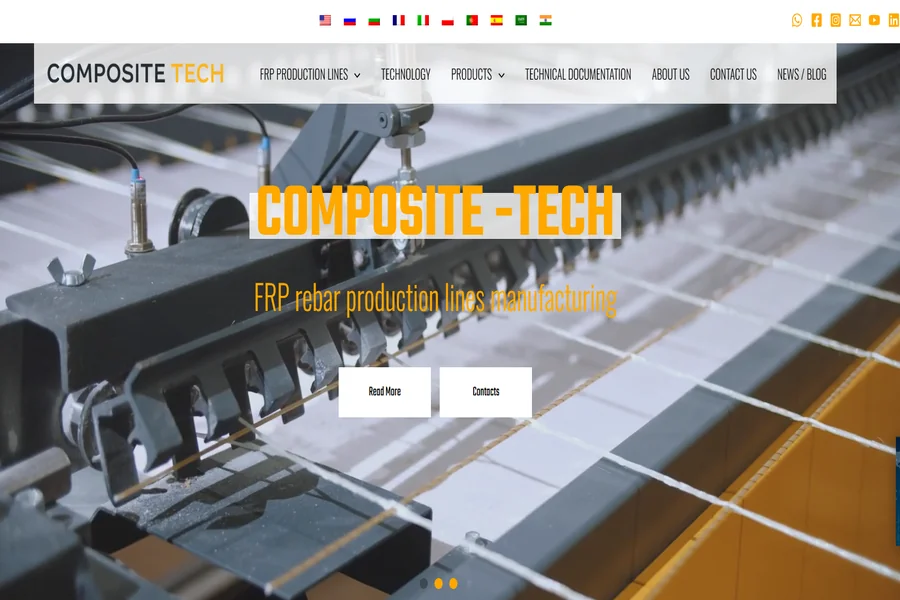
Composite-Tech offers advanced automated manufacturing systems for FRP products, including GFRP, rebar, mesh, and other custom composite reinforcement elements.
The company’s automation solutions have been engineered to produce highly precise, scalable, and stable results for both new and established, large-scale manufacturers.
Key Features
- Fully Automated Production Lines: Provide continuous, high-volume FRP production.
- Advanced Process Control: Provides optimal conditions for aligned fibers, distributed resins, and controlled curing processes.
- Scalable Systems: Suitable for small-scale or industrial-level production.
- Low Energy Requirements: Reduced waste generation and lower operating costs.
- Specialized FRP Manufacturing Capability: Produce a wide variety of straight, bent, and specialized FRP elements.
- Integrated Quality Management: Consistent product quality and performance.
- Technical Support and Training: Assistance with system installation, training, and optimization.
- Real-Time System Monitoring: Enables operators to track production parameters and optimize performance.
- Modular Equipment Design: Allows flexible configuration and future system expansion.
- High Production Throughput: Engineered for maximum output with minimal downtime.
Composite-Tech delivers reliable and scalable automated systems for efficient and high-quality FRP production. Its focus on precision, automation, and flexibility makes it a strong choice for manufacturers aiming to optimize performance and reduce operational costs. The company’s advanced technologies support consistent output across varying production demands, ensuring long-term manufacturing stability.
HSLG Tech
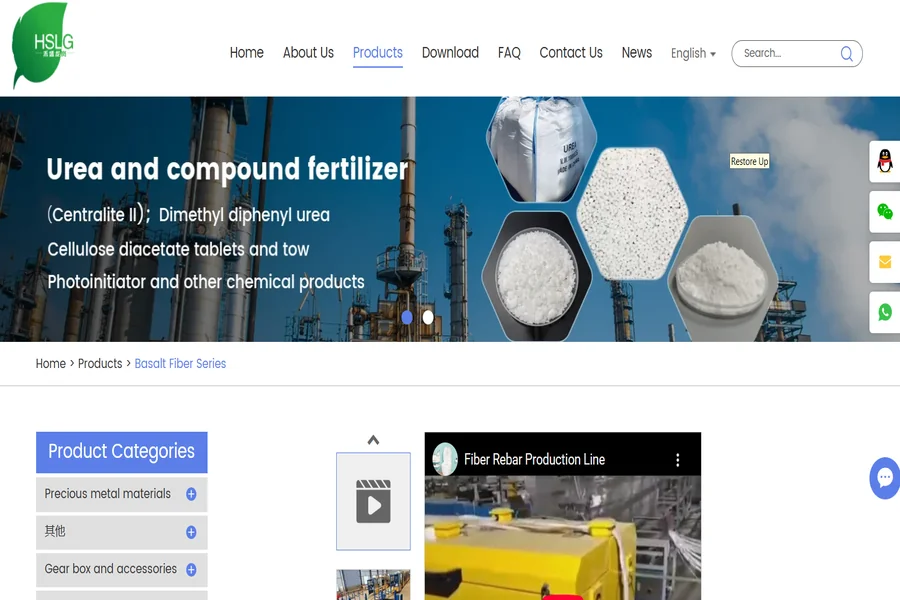
HSLG Tech provides Fiber Composite Reinforcement production lines for the manufacturing of FRP, GFRP, and Basalt Fibre Rebars. The production lines from HSLG Tech provide for high-level automation and a high degree of flexibility when it comes to producing various reinforcement types.
Key Features
- Fully Automated Process Flow: Feeding of Raw Materials, Impregnation of Resin, Curing, and Cutting in One Line.
- Multi-Material Capability: Produces reinforcement using both glass fibre and basalt fibres.
- High Productivity: Reduces the amount of labour required and reduces the energy consumption for the production process.
- Integrated System Components: Yarn Frame, Dipping Tank, Winding Unit, Oven, and Cutting Unit.
- Adjustable Production Parameters: Allows for the production of reinforcement with different diameters and specifications.
- Steady State Operation: Ensures that the quality of the produced reinforcement remains constant over the entire length of the product.
HSLG Tech offers practical and efficient FRP production lines for manufacturers who require flexible and cost-effective reinforcement solutions.
Basalt World Corp.
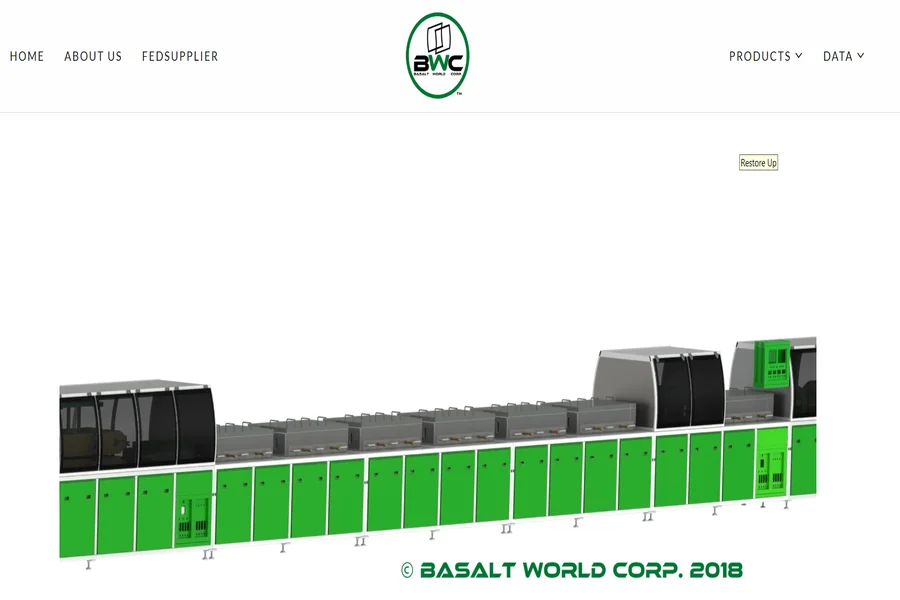
Basalt World Corp manufactures a variety of specialized FRP rebar machines that are designed specifically to produce high-quality composite reinforcements (basalt-based rebar systems).
Key Features
- Multi-Fiber Capability: The machines can be used to manufacture BFRP, GFRP, CFRP, AFRP, and other composite materials.
- Fast Production Rates: The machines are capable of producing rebar at very fast rates while still being able to provide an efficient output rate.
- Dual-Line Rebar Production: These machines will allow you to produce multiple rebar sizes at one time in order to increase your overall productivity.
- Easy to Use: These machines were designed so that they may be operated by smaller, less experienced labor groups.
- Quiet & Safe Operation: Hydraulic systems have been eliminated from the machines so as to create a quieter and safer working environment.
- Optimized to Work With Advanced Materials: The machines have been developed to work with specific types of fibers and resins in order to ensure consistent quality in the products produced.
- Works with Flexible Resin Systems: Epoxy, Vinyl Ester, Polyester, and Bio-resins may be used in conjunction with these machines.
Basalt World Corp provides specialized FRP rebar manufacturing equipment with an emphasis on versatility, efficiency, and high-performance composite production, and innovative systems that can improve speed and consistency during FRP manufacturing.
Strongwell
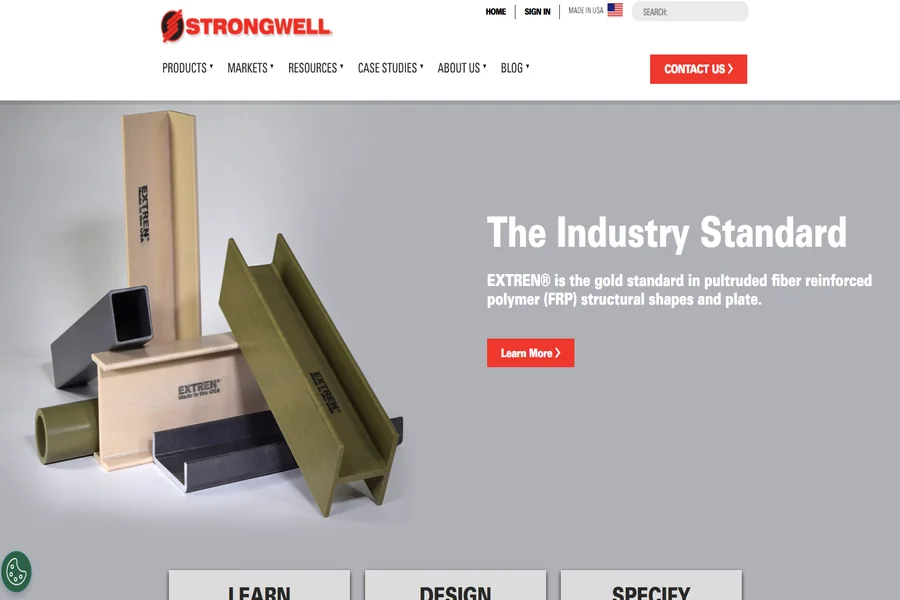
Strongwell has been at the forefront of the composite market for many years and offers fully automated composite production systems to manufacture structural FRP components. Strongwell’s focus is on developing the most durable and reliable solutions to support large-scale industrial manufacturing.
Key Features
- Automated structural production systems: High-performance FRP components.
- FRP Pultrusion Expertise: Long history in automation of composite production.
- Equipment for Industrial Production: Durable and reliable equipment that will last.
- Quality of Outputs: Consistent quality outputs from your manufacturing processes.
- Knowledge of Applications: Understanding of structural FRP needs.
- High Load Capacity Systems: Suitable for producing large and structurally demanding components.
- Proven Production Processes: Established manufacturing methods that ensure reliability and consistency over time.
Strongwell provides full automated systems for manufacturers producing both structural and industrial FRP.
Summing Up
Automated Systems are a requirement of today’s FRP manufacturing process. This is because they enable an increased level of consistency in the quality and productivity of FRP production, as well as allow for an increase in the scalability of the product.
Advanced automation systems will help to decrease the cost per unit by reducing waste and decreasing labor requirements. The use of automated systems also enables reliability and the ability to produce large quantities of composite products, which are in high demand.