

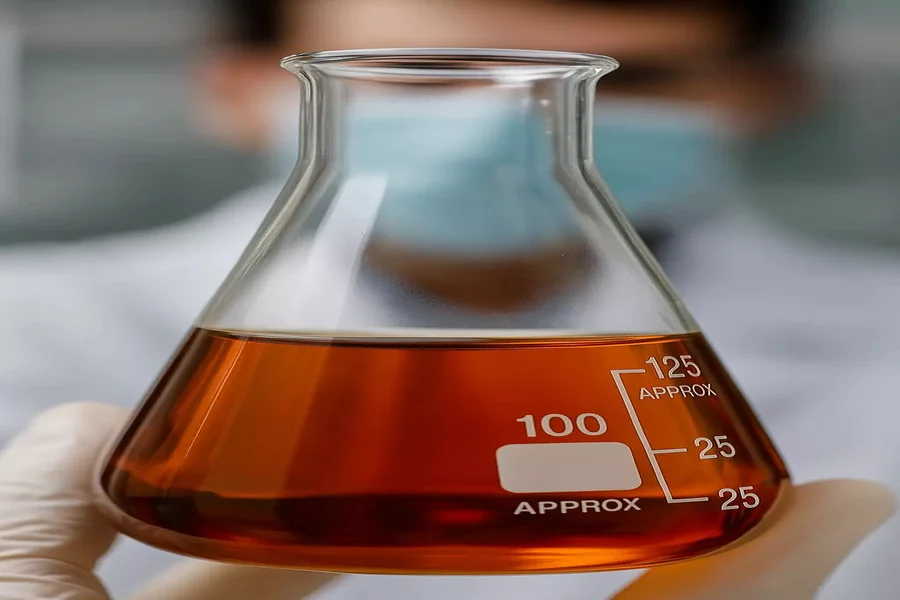
Lubricating oil is a crucial branch of modern petroleum products and indispensable for the stable operation of modern society. It is closely related to the development of industries such as transportation and machinery operation. With increasingly higher usage demands, the performance and quality of lubricating oil need to be improved.
What is lubricating oil?
Lubricating oil is a blend of base oil and lubricant additive in a specific ratio. Additives determine the performance of the lubricating oil and include dispersants, detergents, antioxidants, extreme pressure anti-wear additives, and rust inhibitors. Among these, dispersants are the most widely used and are one of the most important additives in lubricating oil.
Why are dispersants so important?
Lubricating oil provides lubrication and protection between metal parts or equipment. Sometimes, lubricating oil is exposed to high-temperature and frictional environments, which can lead to oxidation and deterioration. This results in the formation of acidic colloids, sludge, carbon deposits, and other impurities within the lubricating oil, affecting its normal use. Dispersants are surfactants, typically polyisobutylene succinimide, which can disperse and inhibit the deposition of impurities and suspend these deposits in a colloidal state within the lubricating oil, thus preventing rapid deterioration.
Composition and Structure of Dispersants
Dispersants are generally surfactants with relatively large molecular weights, and their molecular structure consists of lipophilic groups, polar groups, and linking groups.
Currently, the mainstream dispersants is polyisobutylene succinimide, which are produced by reacting polyisobutylene succinic anhydride with polyethylene polyamines, and are usually alkaline.
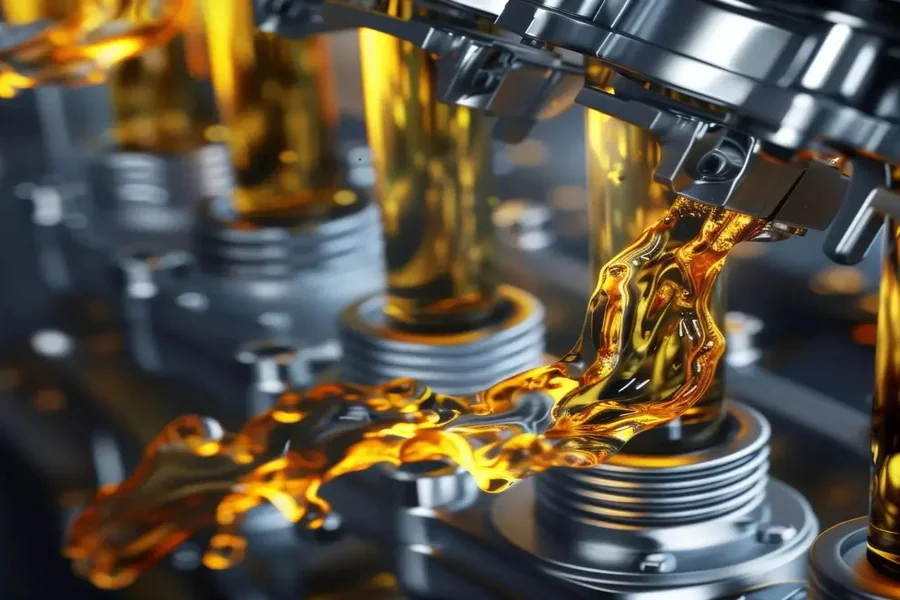
Characteristics of Polyisobutylene Succinimides
The lipophilic group of polyisobutylene succinimide is polyisobutylene (relative molecular weight generally 500-3000). The relative molecular weight of polyisobutylene has a significant impact on the dispersant; dispersants with larger molecular weights have better viscosity-temperature characteristics and can better disperse impurities such as sludge. Molecular weight distribution also affects the performance of the dispersant; generally, the smaller the relative molecular weight distribution, the better the performance of the dispersant. The polar groups are usually nitrogen-containing groups (derived from amines), so they are alkaline. This structure ensures that the dispersant can easily form micelles in lubricating oil, giving it a strong solubilizing effect and enabling the dispersion and solubilization of impurities such as carbon deposits and sludge.
Dispersants are indispensable in engine oil.
The addition of polyisobutylene succinimide dispersant gives internal combustion engine oil excellent low-temperature dispersing properties, which can better solve the problem of low-temperature sludge in gasoline engine oil. Therefore, gasoline engine oil with added dispersants has a longer oil change interval and less sludge in the crankcase, which improves the quality of lubricating oil and reduces usage costs.
As a result, polyisobutylene succinimide dispersant has been rapidly developed and widely used.