

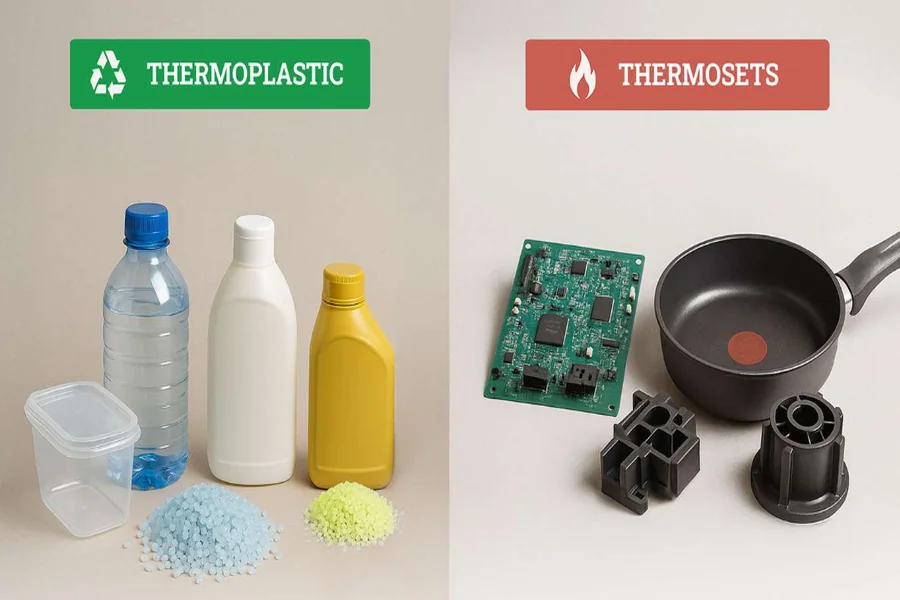
At a time when the world is becoming more focused on circularity and lower-carbon manufacturing, designing products with recycling in mind is no longer simply good practice; it’s rapidly becoming a business necessity. Whether you are creating products for consumer goods, automotive parts, electronics, or packaging, all the correct design decisions that are made early in a product’s lifecycle influence how easily materials can be separated out for recovery and recycling. This guide provides actionable strategies for recycling optimisation of thermoplastic and thermoset plastics to achieve better end-of-life performance, while still meeting performance and cost targets.
Why Design for Recycling Matters
The design choices made at the concept stage have implications throughout production, use, and final disposal. With brands facing increased regulatory pressure (EPR, landfill diversion targets), scrutiny from investors in terms of ESG metrics, and consumers demanding lower-impact products, design for recycling drives down material costs while increasing brand reputation and closing the loop. Recycled feedstock can reduce reliance on virgin resin and act as a hedge against price volatility.
Top Strategies for Recycling Optimisation of Thermoplastic and Thermoset Plastics
Here, we have discussed the best strategies that will help businesses or brands in the better recycling of thermoplastic and thermoset plastics:
1. Start with Material: Match the Function to the Recycling Goal
Thermoplastics: The Recyclability Advantage
All plastics (PE, PP; PET, ABS, PC, PA, etc.) are thermoplastics, and one of the basic advantages these materials have – compared to many other products- is recycling because plastics can be melted and moulded again. Opt for thermoplastics in parts that can be gathered and recycled where possible. Key tips:
- Define only one type of polymer for a part or assembly. One-material parts are significantly less challenging to sort and reprocess.
- Opt for grades with high recycling rates (HDPE, PET, PP) where possible, e.g., packaging and housings which can be returned after use.
Thermosets: Use as Required
Thermosets (epoxies, phenolics, melamine, polyurethanes) are unparalleled for heat resistance, rigidity, and chemical durability. Rather than shunning thermosets altogether, however, think strategically:
- Limit thermoset usage to parts that demand their unique properties.
- Design of the thermoset part should be modular or easy to separate from the main product so that recyclable parts can be separated at EoL.
- Work on new thermoset chemistry and recycling pathways as long-term substitutes.
2. Disassembly and Material Separation in Design
A product that is easily disassembled at the end of life can drastically improve recycling rates. Some practical measures:
- Wherever practicable, use mechanical fasteners in place of permanent adhesives. The part with screws and clips makes it easy to separate the parts.
- Clearly mark parts with standard resin identification codes, and if feasible, add machine-readable tags to assist automated sorting systems (RFID, QR).
- Don’t bond two different polymers to each other, so the housing isn’t permanently glued onto a thermoset internal structure and can block recycling.
- Develop service manuals and take-back instructions for recyclers and repair centers, so that parts can be removed easily.
3. Simplify Colour, Fillers, and Additives
Limiting colourants, flame retardants, and fillers in recycling streams or devaluing the recycled resin. To minimise disruption:
- Use fewer colourants and standard pigment systems, with the recycling compatibility already established.
- Avoid excessive use of non-recyclable fillers whenever possible. If fillers are required for strength or heat properties, opt for those that manufacturers recognise as acceptable to recyclers or that can be sorted out.
- Be careful with halogenated FR, because some of the alternative considerations can have negative consequences on the downstream recyclability and creation of hazardous waste streams.
4. Design for Material Recognition and Sorting
Sorting is the key to successful recycling. Improve sortability by:
- Making use of visible resin codes moulded at prescribed parts’ locations.
- Do not use clear films or labels that prevent easy identification of the base resin type.
- Think about design features that help optical sorting and the dataset, and see which designs actually sort better in practice.
5. Design with Consideration for Recycled Content
If you are looking to add post-consumer and post-industrial recycled content (PCR), then these design considerations should be kept in mind:
- Know the mechanical and thermal characteristics of the recycled resin with which you intend to work.
- Work with recyclers or compounders.
- Define tolerances and acceptance requirements or reasons with regard to variations regarding the feedstock being recycled. Practical tolerances open up the use of PCR to scale without sacrificing quality.
6. Define what Organisations Need to Know Across the Supply Chain
Design for recycling thermoplastic and thermoset plastics is not a lone project. It requires collaboration:
- Communicate the need for recycling with suppliers. Add acceptable resin grades, the acceptable range of filler, and the allowable finish to your procurement specs.
- Collaborate with both OEMs and aftermarket partners to determine whether product teardown and recycling infrastructure are in place or can be implemented at an affordable cost.
7. Pilot, Measure, Iterate
Design should be data-driven:
- Conduct lifecycle assessments comparing materials options to determine the carbon, energy, and end-of-life impacts.
- Work with recycling partners to develop pilot testing for outputs, contamination, and quality of recycled resins.
- Collect feedback from take-back or reverse logistics partners and design for improved recyclability and economics of recycled contents guidance.
8. Policy, Standards, and Consumer Transparency
- Understand the regulatory momentum and certification options that inform design choices.
- Honest labelling, recycled content claims, and public reporting of circularity metrics establish brand trust too — and could speed consumer acceptance of PCR products.
Final Words
Designing for recycling changes the disposal problem of plastic into a feedstock opportunity. By working with recyclers like Banyan Nation, product designers and brand owners can specify recycled resin confidently, secure consistent material quality, and make real progress toward a circular approach for products that minimise waste and carbon footprint.
Design decisions taken today are shaping the availability of materials and their environmental impact tomorrow. When designers, engineers, and recyclers collaborate, thermoplastic and thermoset plastics can be part of a circular, durable manufacturing future.