
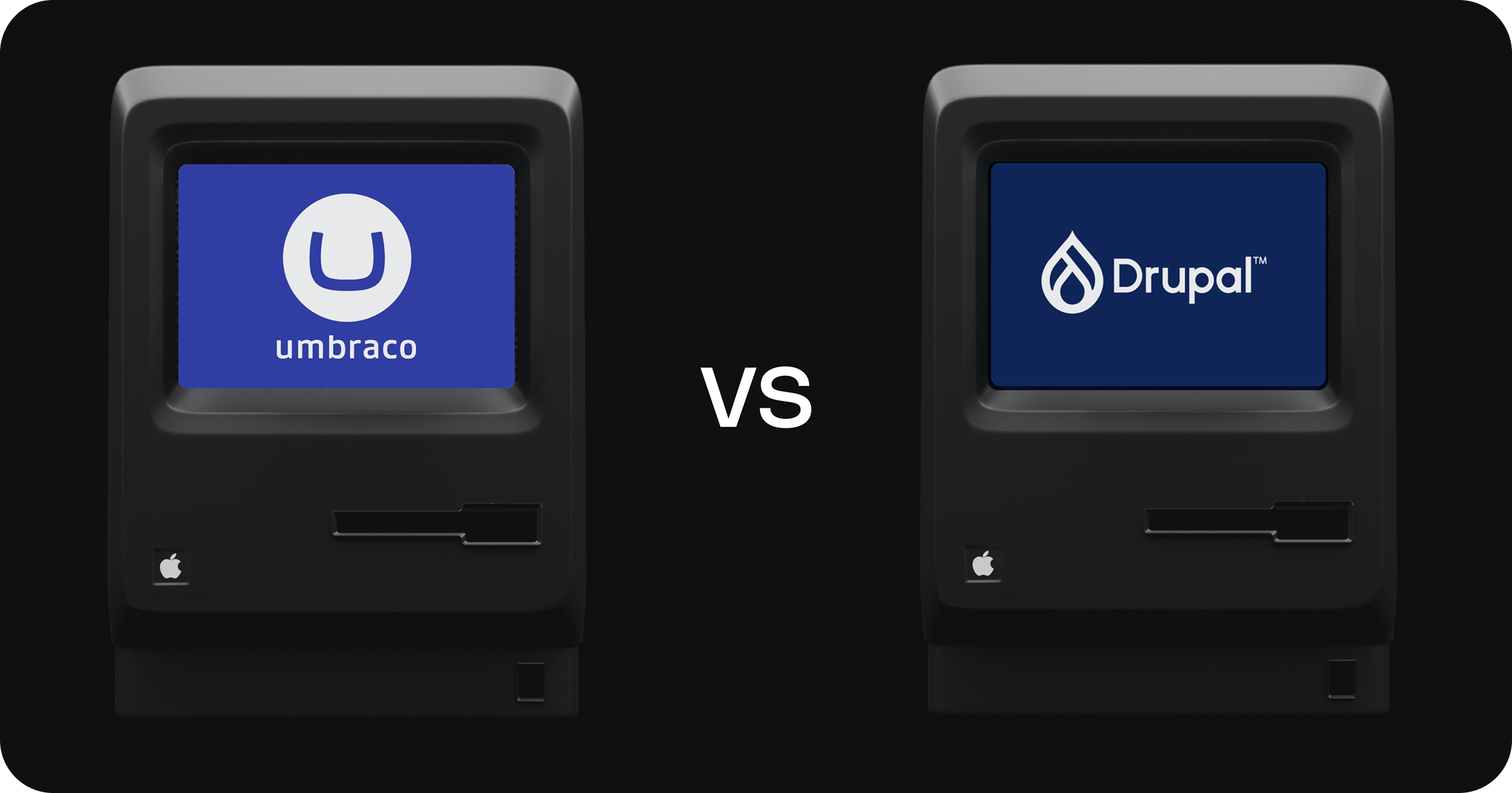
Choosing a CMS is just like choosing the ideal tool to do your job. Some businesses need basic tools that are quick and simple. Others require heavy tools which are able to perform large and complicated jobs. This is what is argued when you make a comparison between Umbraco and Drupal in 2025.
These two systems have totally different users. Umbraco is more like a friendly, easy to drive car. It is aimed at simplifying the projects and relying on the solid background of Microsoft. Drupal acts more like a powerful truck that can carry huge loads and work in tough conditions. It handles big websites for large companies that need lots of features.
The main question is not about which one wins overall. It is about which one fits with what you really need. The decision is based on the size of your company, the skill of your team and the complexity of your website. This choice will influence the development of your online presence in the long run.
Why Businesses Still Care About CMS Decisions in 2025
Your CMS selection does not only have a big impact on your web design. It modifies the perception of your brand by customers, the extent to which your site is capable of expanding, the level of protection of your data, and the speed with which you can make marketing decisions. Modern visitors desire websites that are fast to load, present them with personal content, and perform efficiently on any gadget.
A decent CMS should be more than a tool that simply posts content online. It must integrate with your analytics, enable marketing in various mediums, and provide developers and marketers with what they need to perform their tasks.
Both Umbraco and Drupal address these modern-day requirements. Yet, they approach the same problems in totally different ways.
Umbraco vs Drupal: 6 Key Differences
Both platforms are free to use, and they’ve got active communities that keep making them better. But the way they work, what they offer, and where they fit best are actually quite different.
That’s usually when the real question comes in: should you hire Umbraco developers, or Drupal developers for your next project? It totally depends on what you’re trying to build. For clearing confusion, check six key differences that can help you decide which one’s the right fit.
1. Ease of Use and Learning Curve
Umbraco focuses on being simple to use. People who create and edit content find it easy to learn. The admin area looks clean and makes sense to marketing teams without technical training. Drupal is extremely powerful and complex. Even simple configuration tasks are frequently required to be assisted by a developer.
- Umbraco strength: Content teams can start working right away without much training.
- Drupal strength: Developers get amazing control, but beginners struggle with it.
2. Flexibility and Customization
Drupal is the best option when you require complete control over all the details. You can set up progressive user controls, create your workflows and design a unique site structure. This is ideal for government websites, large universities or businesses requiring websites in a variety of languages. Umbraco also allows customizing things, particularly when your team is familiar with .NET. But it works best for business websites and marketing-focused teams.
- Umbraco: Simple customization for typical business needs.
- Drupal: Better choice for complex sites with many different requirements.
3. Performance and Scalability
The speed and the growth capability continue to be important in 2025. The architecture of Drupal is able to sustain massive websites, which have millions of pages, without collapsing. Umbraco is based on Microsoft. NET core platform, therefore, being fast and suitable for medium to large companies.
- Umbraco: Works well with Microsoft tools and caching systems.
- Drupal: Proven track record handling enterprise-size websites.
4. Security
Drupal has earned respect for keeping sites safe. It has a team that focuses only on security and releases updates regularly. Governments and important organizations around the world trust Drupal with sensitive information. Umbraco has gotten much better at security, especially by using Microsoft’s secure framework. But it still doesn’t have Drupal’s proven track record for high-risk situations.
- Drupal: Trusted choice when security cannot fail.
- Umbraco: Safe option within Microsoft-based systems.
5. Ecosystem and Community Support
Drupal has one of the biggest open-source communities. You can find thousands of free modules and themes made by other users. The community of Umbraco is less and yet very helpful and concentrated. They make great quality add-ons and support one another well.
- Drupal: Large global community and many free resources.
- Umbrico: Smaller and committed community that is business-oriented.
6. Cost of Ownership
Both systems cost nothing to download and install. But the real costs show up later. Drupal projects will require special developers, who are usually more expensive. This can render projects costly. Umbraco projects cost less to build, especially if your team already knows .NET development. You can launch faster and spend less money upfront.
- Umbraco: Costs less to get started and build.
- Drupal: Costs more, but worth it for huge, complex projects.
Which Industries Benefit Most from Each?
Umbraco
- The medium-sized companies that require stable solutions.
- Organizations that focus on marketing and frequently update content.
- Firms are already running on Microsoft technology.
- Companies with an urgent need to create websites.
Drupal
- Non-profit organizations and government agencies.
- International universities have multifaceted demands.
- Big companies that have multiple brands or sites.
- Companies dealing with sensitive information or with millions of users.
Conclusion
The Umbraco vs Drupal debate in 2025 is not about the winner. It’s about finding the right match for how your business actually works. Umbraco will be a great solution in case you require easy operations, Microsoft integration, and quick project delivery. Drupal cannot be defeated when you require complex workflows, enterprise-level growth capacity and government-level security.
Regardless of whether you choose Umbraco or Drupal, the right development team is all that separates success and failure. To companies that are willing to maximize the potentials of Umbraco, collaboration with talented developers is a way of developing secure, scalable, and future-proof digital solutions.
FAQs
1. Which CMS is easier for non-technical users, Umbraco or Drupal?
Umbraco is more suitable to a content editor and marketing team due to its simple design. Drupal provides more strong tools but requires more time to learn. Average users require assistance from developers to work with Drupal correctly.
2. Can Drupal handle large-scale enterprise websites better than Umbraco?
Drupal is ideal in large, complex sites that require numerous languages, unique workflows and varying user permissions. Umbraco can take care of medium to large business websites, although highly complicated projects may require additional custom development.
3. Is it better to hire Umbraco developers or Drupal developers for a new project?
The selection is based on the type of CMS you are choosing and the technology that you are using. Those companies that collaborate with Microsoft tools may consider recruiting Umbraco developers. Instead, businesses requiring custom features at an enterprise level may desire Drupal experts.