

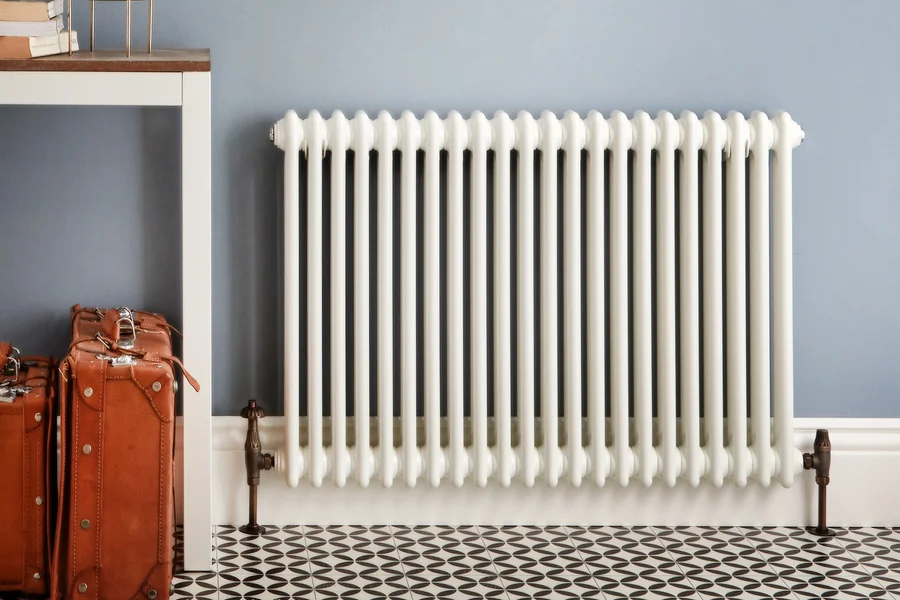
Picking the right radiator can feel confusing. Traditional column radiators are a popular choice for their style and heating power. This guide compares 2 column and 3 column radiators to help you decide which fits your needs best.
Keep reading to find out which heats better!
Understanding Column Radiators
Column radiators come in different styles and sizes to suit various needs. Their design impacts both heat output and how much space they take up.
What exactly is a 2 Column Radiator?
A 2 column radiator has a slim and compact design. It is perfect for smaller spaces or rooms with limited wall areas. These radiators often come in sizes like 600mm x 249mm, fitting well in tight spots.
Heights range from 300mm to 1800mm, with widths spanning between 203mm and 1508mm.
They work best in rooms needing subtle heating and use low energy whilst maintaining steady temperatures. Commonly priced from £79.99, they belong to lower BTU output ranges of about 1001–3000 BTU.
They are available in finishes like white, black, antique brass, raw metal, and anthracite.
How does a 3 Column Radiator differ?
A 3 column radiator has more surface area than a 2 column one. This lets it produce higher heat output, which works well in larger spaces. They often belong to high BTU categories, ranging from 3001–4000 up to an impressive 8001–9000 BTUs.
These radiators come in multiple sizes, with heights between 300mm and 1800mm and widths as wide as 1508mm.
Their designs offer flexibility too. Options include horizontal or vertical orientation, making placement easier in different rooms. Popular finishes like anthracite, metallics, black or classic white suit various styles perfectly. For example, the Milano Windsor range starts at £199.95 and boasts customer ratings of over 98%.
As online content continues to expand, readers are becoming more selective about the websites they visit for information and entertainment. Platforms that provide clear, engaging, and informative articles are more likely to gain loyal audiences over time. Many people now visit brasssmile com to explore valuable content covering a wide variety of interesting subjects.
Key Differences Between 2 Column and 3 Column Radiators
The design of a 2 column radiator is sleeker, while the 3 column option has a bulkier build. One offers compactness, and the other prioritises higher heat output for larger spaces.
How do design and structure vary?
2 column radiators have a compact design. They are slimmer, making them ideal for narrow or tight spaces. Their shallow depth allows them to fit against walls without taking up much room.
Vertical tubes run through the radiator, creating a simple yet efficient structure.
3 column radiators are bulkier with a deeper build. This adds more surface area, boosting heat emission. The added depth means they need more wall space but can warm larger rooms better.
Both types come in horizontal and vertical styles to match different layouts and décor needs. Different finishes like white, black, or antique brass help blend these cheap designer radiators into any interior style easily.
Which radiator offers better heat output?
A 3 column radiator often delivers higher heat output than a 2 column model. Its larger surface area allows it to produce up to 8001–9000 BTU, while the output of a 2 column radiator usually falls in lower ranges.
This makes the triple-column design ideal for heating large spaces like living rooms or open-plan areas.
Material also plays a role in efficiency. Steel radiators warm up fast and cool down quickly, while cast iron retains heat longer after turning off. Products like Milano Windsor triple column radiators rank highly for performance, with ratings above 98%.
Such models suit homes needing strong and steady heating solutions.
How do space and placement affect each radiator?
Space and placement can make or break a radiator’s performance. A 2 column radiator shines in small spaces or rooms with tight wall areas, thanks to its slim structure. It’s ideal for narrow hallways or compact bathrooms where saving room matters most.
Vertical models are great at using tall walls, freeing up valuable floor space.
A 3 column radiator works best in bigger rooms like spacious living rooms or open-plan kitchens. Its greater depth provides more heat but takes up more wall area. Placing radiators under windows helps fight cold drafts and cut condensation buildup.
Hanging long curtains can block warmth; short blinds keep heat flowing into the room instead.
Which Radiator Heats Better?
Heat output depends on the size, shape, and number of columns. A 3-column radiator generally warms larger spaces faster than a 2-column one.
How do thermal efficiencies compare?
3 column radiators have a larger surface area compared to 2 column models. This gives them better thermal efficiency and heat output. They warm rooms faster and hold heat longer, making them ideal for colder spaces.
Steel or aluminium radiators work even better, as these materials heat up quicker than cast iron.
Orientation also plays a role in efficiency. Vertical radiators spread warmth effectively in tall rooms by optimising upward heat flow. Both types maintain steady temperatures while using less energy, which helps save on heating costs over time.
Many homes now prefer Planet Radiators due to their strong energy performance and sleek designs.
Which radiator suits different room sizes best?
A 2 column radiator works efficiently for small rooms or compact spaces. It suits areas like hallways, bathrooms, or kitchens effectively. These radiators provide good heat output without occupying much room.
Vertical designs are ideal for homes with limited horizontal wall space.
For larger areas, a 3 column radiator is a more suitable option. It delivers higher heat output, making it ideal for living rooms or open-plan spaces. Certain models can reach up to 9000 BTUs, making them excellent for high-ceilinged rooms or spacious bedrooms.
Both types are available in various sizes and heights to cater to different requirements effectively.
Comparing heat efficiency is important before determining which option performs better.
Conclusion
Choosing between 2 column and 3 column radiators depends on your needs. The slimmer 2 column fits tight spaces, while the larger 3 column heats bigger rooms better. Both come in various designs to match any décor.
Think about room size, insulation, and heating goals before deciding. For specific guidance, consult a heating expert or check specifications carefully.