

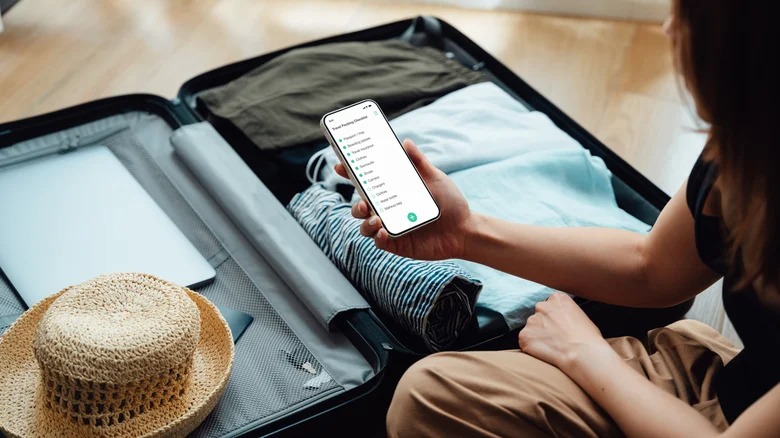
There was a time when preparing for an international trip meant carrying a folder full of printed documents. Travelers packed paper maps, guidebooks, hotel confirmations, flight tickets, phrasebooks, and sometimes several different currencies before leaving home.
Most of those things now live inside one device.
The smartphone has quietly become one of the most important pieces of travel equipment we carry. It helps us navigate unfamiliar streets, translate conversations, store boarding passes, book transportation, manage payments, communicate with hotels, and stay connected almost anywhere.
What makes this change particularly interesting is that smartphones are no longer simply replacing individual travel tools. They are connecting many parts of the journey together.
A map can lead directly to a restaurant booking. A flight notification can trigger a change in an airport transfer. A translation app can help a traveler communicate with a driver. Mobile data can make all of these services available within seconds.
International travel is increasingly mobile-first, and the technology inside our phones is changing what travelers expect from a trip.
Paper Maps Have Become Live Navigation
Few technologies have changed travel as dramatically as digital maps.
A paper map could show where a street was located, but it could not tell you that traffic had suddenly increased, that a restaurant had closed, or that another transportation route might save twenty minutes.
Modern navigation apps can.
Travelers now land in cities they have never visited and begin navigating almost immediately. A phone can guide someone from an airport to a hotel, from a hotel to an attraction, and later to a restaurant hidden several streets away.
This becomes even more useful during multi-city journeys.
Imagine traveling from Istanbul to Cappadocia and then continuing toward Antalya. Every destination introduces new streets, transportation systems, accommodation addresses, and points of interest.
Instead of learning an entirely new map each time, travelers carry the same familiar navigation interface everywhere.
That convenience has changed travel behavior. People are more comfortable exploring neighborhoods away from major tourist routes because getting lost is no longer quite as intimidating.
Of course, navigation becomes significantly more useful when the phone has a working internet connection.
Offline maps are an excellent backup, but live mobile data allows travelers to search for places, check updated routes, find transportation options, and access current information while moving.
Boarding Passes and Reservations Have Moved to the Screen
Airports provide another obvious example of how smartphones have replaced traditional travel essentials.
Printed boarding passes are increasingly unnecessary. Airlines can send boarding information directly to an app or digital wallet, and passengers can receive updates about check-in, gates, boarding times, and delays on the same device.
Hotel reservations have followed a similar path.
Instead of carrying a printed booking confirmation, travelers usually open an email or accommodation app. The hotel address, reservation number, check-in information, and contact details are available immediately.
This is convenient until internet access disappears.
For that reason, experienced travelers often combine online convenience with a simple offline backup. Taking screenshots of important reservations, addresses, and boarding information can save time if mobile coverage temporarily becomes unavailable.
Technology works best when travelers prepare for both connected and disconnected situations.
Translation Technology Has Changed Communication
Language barriers have always been part of international travel.
In the past, travelers carried pocket phrasebooks or memorized a handful of common expressions before visiting another country.
Today, smartphones can translate text, speech, menus, signs, and even conversations.
This does not eliminate the value of learning basic phrases in the local language. Making an effort to communicate locally is still an important part of travel.
But translation technology provides a useful safety net.
A traveler can photograph unfamiliar text and receive a translation within seconds. Someone communicating with a taxi driver can type an address or sentence rather than trying to pronounce it perfectly. Restaurants, transportation instructions, and accommodation messages become easier to understand.
This technology becomes particularly valuable when travelers leave areas where English is commonly spoken.
In large tourism centers, communication may be straightforward. In smaller towns or more local environments, a translation app can turn a potentially confusing situation into a simple interaction.
Mobile Internet Is Becoming a Travel Essential
Many of the smartphone features travelers depend on share one requirement: connectivity.
Maps need updated information. Messaging apps need a network connection. Transportation services need data. Hotel apps, digital tickets, online payments, translation tools, and travel research frequently depend on internet access.
That has changed the way people think about mobile service abroad.
Traditional international roaming remains one option, and local physical SIM cards are still widely used. But newer smartphones have introduced another possibility through eSIM technology.
An eSIM is a digital SIM profile that can be installed on a compatible smartphone without inserting another physical card. For international travelers, one practical benefit is the ability to arrange mobile data before or during a journey without searching for a SIM shop after arrival.
This can be especially useful in destinations where the phone becomes essential immediately.
A traveler heading to Istanbul, Cappadocia, Antalya, or another part of Türkiye can, for example, arrange an eSIM Turkey data plan before the trip and prepare the phone for mobile connectivity before needing navigation or transportation at the destination.
The technology itself is less important than the convenience it creates.
Travelers increasingly expect internet access to be available when they need it rather than only when they reach a hotel or find public Wi-Fi.
Dual SIM Has Made Travel More Flexible
Another smartphone feature that has quietly improved international travel is dual-SIM functionality.
Many modern phones can maintain more than one mobile line. Depending on the device, this might involve a physical SIM combined with an eSIM or multiple digital profiles.
For travelers, the advantage is flexibility.
Someone can keep their usual mobile number available while using another connection specifically for mobile data abroad.
This can be useful for people who want to continue receiving important messages on their primary number without using their home carrier for all mobile internet traffic.
It also means travelers do not necessarily need to remove their primary physical SIM every time they cross a border.
However, dual-SIM technology makes understanding phone settings more important.
Travelers should know which line is selected for mobile data and whether their primary SIM is allowed to use data roaming. Otherwise, a phone may connect through the wrong mobile plan.
The technology is convenient, but a few minutes spent reviewing the settings before departure can prevent unexpected roaming charges later.
Smartphones Have Changed Local Transportation
Arriving in an unfamiliar city used to involve more uncertainty.
Travelers had to understand taxi systems, locate bus stops, ask for directions, or negotiate transportation without much information.
Phones have made the process more transparent.
Navigation apps can show distances before a journey begins. Transportation platforms can connect passengers with drivers. Public transit applications can help visitors identify stations and routes.
Even when a local transportation service does not have a dedicated app, travelers can usually search for directions, schedules, or station locations online.
That matters especially after arriving at an airport.
The period between landing and reaching accommodation is often when travelers are least familiar with their surroundings. Having access to maps, booking details, messages, and transportation information from the same device removes a significant amount of uncertainty.
Planning Connectivity Before the Flight
Connectivity is increasingly something travelers arrange before departure rather than after landing.
For someone visiting Türkiye, that can mean comparing roaming costs with local or digital alternatives, checking how much data will be needed, and confirming that the phone supports the chosen option.
A Turkey eSIM can be particularly convenient for travelers who want mobile data ready for navigation, messaging, transport apps, and travel research without replacing their main physical SIM.
The important thing is to prepare the device correctly.
Travelers should check whether their phone supports eSIM, understand which line is selected for mobile data, and review the relevant roaming settings before the trip.
Doing this at home, while connected to reliable Wi-Fi, is much easier than troubleshooting the phone after landing.
The Camera Is Now Part of the Travel Toolkit
Smartphone cameras have also transformed how people experience travel.
For most travelers, carrying a separate camera is no longer necessary. Modern phones can capture high-quality photos and videos, edit them immediately, organize them by location, and back them up automatically.
But this convenience introduces another issue: mobile data consumption.
High-resolution photographs may not consume data when they are taken, but automatic cloud backups can.
Video is even more demanding.
A traveler who spends the day recording clips and then allows the phone to upload everything over mobile data may use a significant amount of a travel data plan without realizing it.
Before traveling internationally, it is worth checking whether photo backups, application updates, and large downloads are restricted to Wi-Fi.
Mobile data is far more useful when reserved for navigation, messaging, transportation, and other services needed while away from a Wi-Fi connection.
Mobile Payments Are Reducing the Need for Cash
The smartphone is also becoming a wallet.
Mobile payment systems allow compatible cards to be stored digitally and used at contactless payment terminals. Banking applications make it possible to check transactions, transfer money, or manage cards while traveling.
Cash has certainly not disappeared, and carrying some local currency remains sensible in many destinations.
But travelers increasingly rely on a mixture of physical cards, digital wallets, and mobile banking rather than carrying large amounts of cash.
This creates another reason to keep the phone charged and connected.
Losing access to a smartphone while traveling is no longer only a communication problem. It can affect navigation, reservations, payments, tickets, and access to financial services at the same time.
Battery Life Has Become More Important Than Ever
As smartphones replace more travel tools, battery life becomes increasingly important.
A phone used only for occasional calls could survive most of a day without much thought. A modern travel phone may spend hours running navigation, taking photographs, searching for transportation, translating text, and using mobile data.
That workload can drain a battery surprisingly quickly.
Travelers can reduce consumption by lowering screen brightness, using battery-saving mode when necessary, downloading maps in advance, and limiting unnecessary background activity.
A compact power bank can also be one of the most useful accessories for long travel days.
The goal is not to spend a trip worrying about battery percentages. It is simply to recognize that a smartphone now performs tasks that used to be spread across several separate tools.
If the phone stops working, many of those tools disappear together.
Connectivity and Security Go Together
Travelers frequently turn to public Wi-Fi when mobile data is unavailable.
Airport, hotel, café, and restaurant Wi-Fi can certainly be convenient, but travelers should still think carefully about what they do on networks they do not control.
Keeping the phone’s operating system updated, using strong device authentication, enabling two-factor authentication where appropriate, and being cautious with unfamiliar networks are basic digital habits that become more important abroad.
Having personal mobile data available can also reduce the need to connect to every public network encountered during a trip.
This does not mean public Wi-Fi should never be used. It simply gives travelers more choice.
When connectivity is available directly through the phone, connecting to an unknown network is no longer the only way to check a map or send a message.
The Smartphone Has Become the Modern Travel Companion
Perhaps the most significant change is not any single smartphone feature.
It is the way all these technologies work together.
Navigation connects to transportation. Transportation connects to digital payments. Reservations connect to maps. Translation helps with local communication. Mobile connectivity keeps all of these services available while the traveler moves between places.
The result is a very different style of international travel from the one people experienced only a generation ago.
Travelers can make decisions later, change plans more easily, explore unfamiliar areas with greater confidence, and access information almost instantly.
That does not mean every journey needs to revolve around a screen.
In fact, good travel technology should do the opposite. It should remove small logistical problems so people can spend less time managing the trip and more time experiencing it.
A smartphone cannot replace the excitement of discovering a new city, tasting unfamiliar food, meeting people, or seeing a place for the first time.
But it can make getting there, finding your way around, and staying connected considerably easier.
And as smartphones continue to absorb functions that once required separate devices, documents, and services, their role in international travel will only become more important.