
The machine is down. Someone has already opened the control cabinet. Someone else is holding a flashlight. And somewhere nearby, a technician is staring at a component label as if the part number might suddenly explain itself.
It doesn’t. Finding a replacement for failed automation equipment sounds straightforward until you realize that two components can look nearly identical while having very different specifications. For facilities using Siemens equipment, choosing the right Siemens spare parts means looking beyond the brand name and matching the replacement to the system it needs to serve.
First, Hunt Down the Part Number
Start with the label. The complete part number is often the most useful clue when identifying a replacement. Don’t settle for a partial number if the full identification information is available. Model numbers, ordering codes, and other markings can distinguish components that otherwise appear remarkably similar.
Photographs can help, too. Capture the label clearly and record where the component is installed.
Why make future-you play detective? Because future-you is usually dealing with a stopped production line.
Then Ask: What Does This Thing Actually Do?
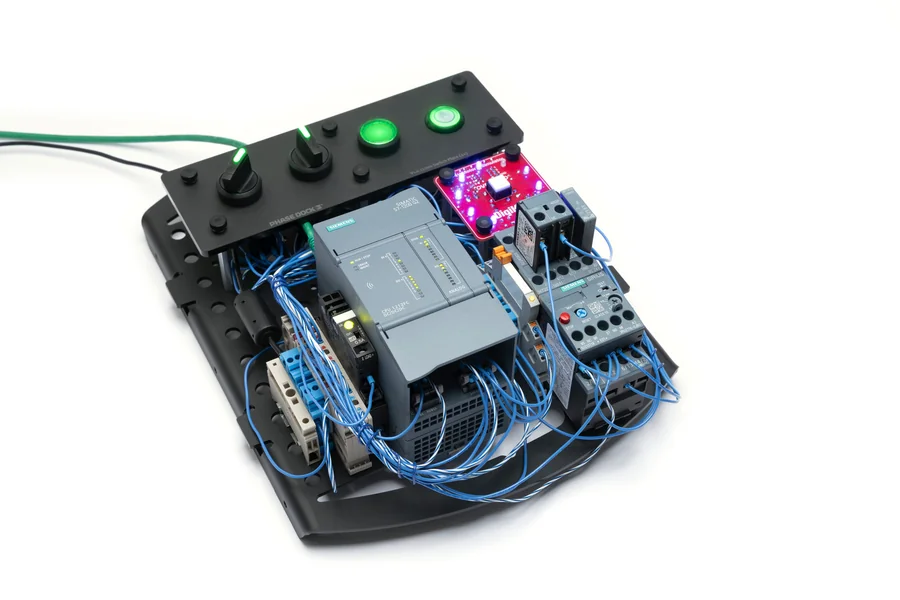
A component’s job matters just as much as its identity. Is it handling inputs or outputs? Is it part of a PLC setup? Does it provide power or communication? Is it connected to another piece of automation equipment that has its own requirements?
Understanding the component’s function helps put the replacement into context. Industrial automation equipment works as a connected system, so a replacement shouldn’t be evaluated as an isolated box simply because it fits into the same physical space.
Looks Right. Isn’t Enough.
This is where replacement searches can go sideways. A component may have the right dimensions and still fail to meet the electrical, communication, software, or configuration requirements of the existing installation. Depending on the equipment, firmware and system-generation considerations may also affect whether a replacement is appropriate.
In other words, physical compatibility is only the opening question. The better question is: Will this component actually work here?
Don’t Forget the Age of the System
Automation systems can stay in service for years, sometimes long after newer generations of equipment have appeared.
That creates an interesting problem. The component that originally came with the system may no longer be manufactured or readily available. A suitable replacement may therefore involve identifying a compatible alternative rather than simply ordering an identical new unit.
Before purchasing Siemens spare parts, determine what generation of equipment you’re dealing with and whether the replacement is intended as a direct substitute or requires additional consideration.
That little bit of homework can save a lot of frustration.
Put Sourcing on the Checklist
Once the specifications are clear, sourcing becomes the next piece of the puzzle. Classic Automation is one resource businesses can use when researching industrial automation components and replacement equipment.
The smartest time to investigate sourcing options isn’t necessarily during an emergency. If a critical component has limited availability or a lengthy lead time, identifying potential replacements ahead of failure gives maintenance teams more options. And options are valuable when the production clock is running.
Document Everything While It Still Works
Here’s an unglamorous maintenance habit that deserves more credit: documentation. Record the component’s complete part number, location, application, and relevant system information while the equipment is operational. Keep photographs of labels and connections where appropriate, and make sure the information can actually be found by the people who may need it.
A beautifully documented spare-parts database is useless if nobody knows where it lives. The same goes for a folder called “PLC Stuff.” Be specific.
Build a Spare Inventory With Some Common Sense
Keeping every possible replacement on hand isn’t practical. Prioritize. Critical components deserve greater attention when their failure could stop production, their replacement is difficult to source, or their lead time is unpredictable. Components with a history of failure may also warrant additional inventory.
Review those decisions periodically. Equipment changes. Availability changes. Production priorities change. Your spare-parts strategy shouldn’t be frozen in time just because the control cabinet is.
The Right Replacement Is About the Whole System
Selecting Siemens spare parts isn’t really about finding something that looks familiar. It’s about matching a component to the technical and operational requirements of the equipment already in place.
Start with the part number. Confirm the function. Check the system generation. Compare specifications. Document what you have. Plan for components that could be difficult to replace.
Simple steps, perhaps. But they become remarkably valuable when a machine stops and everyone suddenly wants the same answer: “Do we have the right part?” Better to know before the lights on the control panel start blinking.