

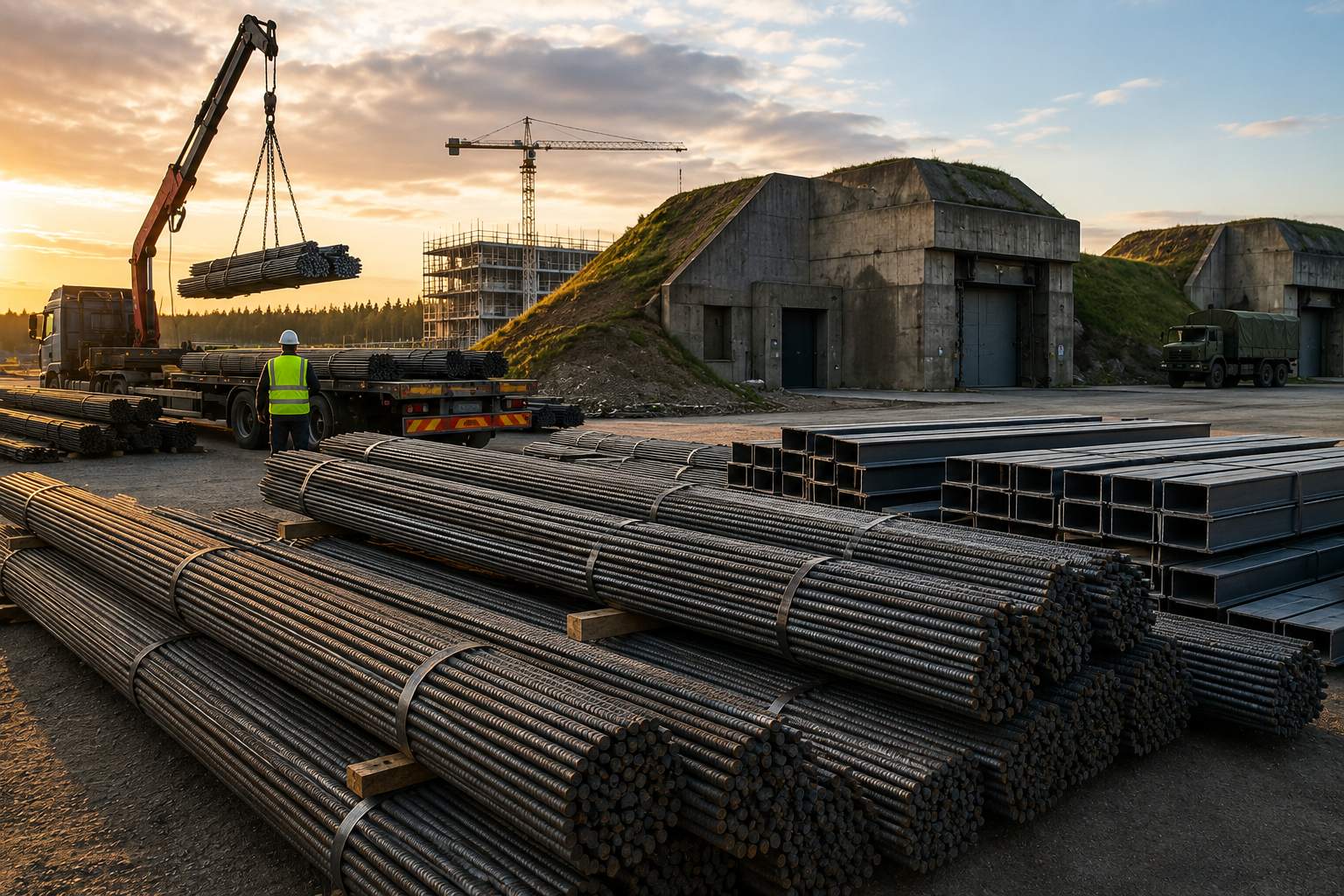
NATO’s Baltic members have committed to spending 5% of GDP on defense from 2025, and a large share flows into concrete- and steel-heavy infrastructure: bunkers and fortified roads. Ammunition depots draw on the same steel and concrete. Almost none of this shows up in a household budget directly, but every steel supplier in the region now allocates capacity differently than it did two years ago, and that shift quietly reaches ordinary construction sites.
Why Defense Projects Eat Construction Steel First
Fortified positions and military access roads run on rebar and structural steel, the same grades used in an ordinary housing block or a commercial build. Ammunition depots and hangars draw on identical stock. What changes is the ordering pattern. Defense contracts arrive as large, fixed-deadline volumes tied to state budgets, and a mill fills its schedule with the largest, most certain orders first. A distributor plans mill runs and warehouse allocation around that months in advance. The private orders don’t disappear, but they move down the list, and lead times stretch for everyone ordering outside a state contract.
Who Actually Keeps The Region Supplied
The Nordic-Baltic steel trade runs through a handful of large distributors holding regional stock. No construction or defense project can wait for material shipped in from outside Europe on short notice, so these companies carry beams and reinforcement steel in local warehouses. Plate and tube round out the stock. Energy projects and defense contractors draw from that same pool without months of lead time.
Tibnor, part of the SSAB group, is one of the larger players in that structure, supplying roughly 10,000 customers across industry and energy, with construction accounts drawing from the same stock. That customer count alone shows the scale of what’s competing for the same steel right now: a Steel supplier serving that many accounts feels a defense-driven demand spike almost immediately, long before it reaches national headlines.
In practice, distributors won’t confirm a firm delivery date until the mill slot behind a large contract is locked in. Place a call-off order even a week after that slot fills, and it can slip a full quarter down the schedule. Mills batch call-off orders into fixed production windows and rarely reopen one once it closes, a detail that rarely shows up in a price quote until the customer asks directly.
The Assumption That Civilians Aren’t Affected
Most coverage of the 5% target treats it as a government budget line, separate from ordinary life. In practice, defense projects and private construction draw from the same steel stock at one distributor, competing for identical delivery slots. A renovation contractor ordering reinforcement bar for a basement extension competes, structurally, with a contract for a military logistics hub, even though nothing links the two projects on paper.
This is where the effect turns concrete rather than theoretical. Homebuilders and renovators sourcing material through a platform like Bygges can face a longer lead time or a firmer price quote than expected, with no visible link to any defense budget at all. The fortification project and the garage extension draw from the same shelf.
What Tighter Steel Supply Means Going Forward
Expect lead times on structural steel to stretch further as long as the 5% target holds, with gradual upward pressure on price for the grades used in both fortifications and standard framing. This isn’t a short-term spike tied to one contract. It’s a sustained reallocation of regional capacity, and it changes how early a project timeline needs to lock in its steel order. Anyone planning a build or renovation should order structural steel earlier than they would have two years ago, and confirm delivery windows before finalizing a schedule rather than after.
The Baltic defense buildup shows up first in mill schedules and warehouse allocation, not in ministry statements. A contractor who checks a distributor’s call-off calendar before pouring a foundation will know the real delivery date faster than one who checks the news.