

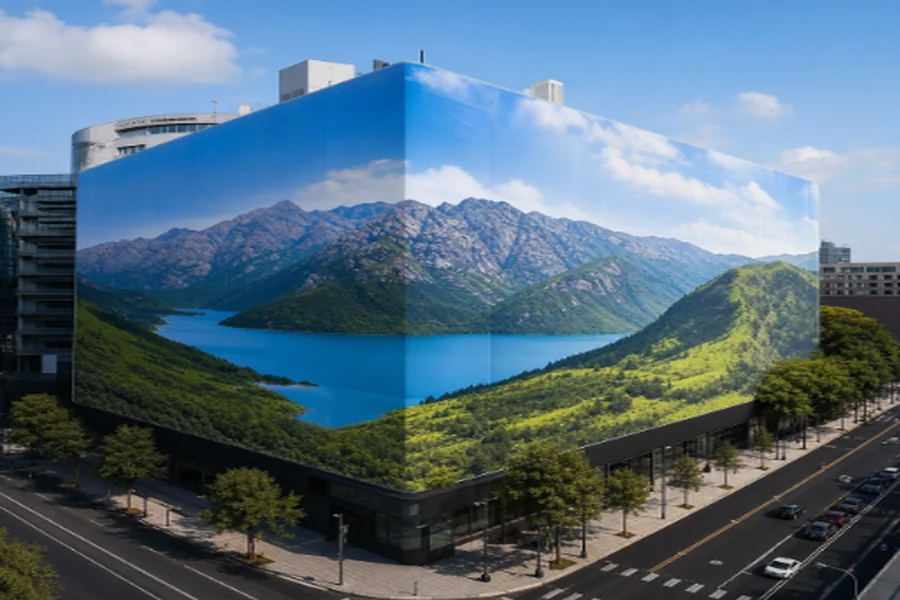
In a world saturated with digital noise, brands are increasingly turning to physical, large-scale environments to make a lasting impression. Among the most powerful tools in modern outdoor marketing is the use of building wraps — massive, visually commanding graphics that transform entire structures into branded canvases. Whether placed on corporate headquarters, retail storefronts, or construction hoardings, these installations deliver an impact that no banner ad or social media post can replicate. As cities grow denser and competition for consumer attention intensifies, building wraps have evolved from a novelty into a cornerstone of serious brand strategy.
What Makes Building Wraps So Effective?
The effectiveness of building wraps lies in their sheer scale and unavoidability. Unlike a billboard that competes with dozens of others along a highway, a building wrap dominates its environment. Pedestrians, commuters, and passersby cannot scroll past it or skip it. The message is delivered whether the viewer intends to receive it or not — a quality that digital advertising has largely lost in the era of ad blockers and banner blindness.
Beyond reach, building wraps offer an extraordinary canvas for creative storytelling. A well-designed wrap doesn’t just display a logo or tagline; it transforms architecture into art. When executed with precision, the graphic integrates with the building’s physical features — windows, columns, and ledges — creating an immersive visual experience that stops people in their tracks. This level of creative ambition is simply not possible with smaller-format advertising.
The Psychology Behind Large-Format Outdoor Advertising
Research in consumer psychology consistently shows that size correlates with perceived authority and credibility. When a brand occupies an entire building facade, it signals confidence, stability, and market dominance. This psychological effect is particularly valuable for brands entering new markets, launching major products, or repositioning their identity. The sheer physical presence of a building wrap communicates that a brand is serious — and that message is absorbed almost subconsciously by the audience.
Applications Across Industries
Building wraps are not limited to any single industry. Retail brands use them to generate buzz around store openings or seasonal campaigns. Real estate developers deploy them on construction sites to pre-sell the vision of a project before a single unit is occupied. Entertainment companies wrap venues ahead of major releases or events. Sports franchises use them to celebrate athletes and energize fan bases. Even government agencies and nonprofits have adopted building wraps to communicate public health messages and civic campaigns at scale.
The versatility of the medium is one of its greatest strengths. A building wrap can be temporary — installed for a product launch and removed within weeks — or semi-permanent, serving as a long-term brand presence in a high-traffic urban corridor. This flexibility allows marketers to align the medium with campaign objectives, budget cycles, and seasonal timing without the rigid constraints of traditional outdoor advertising contracts.
Material Innovation and Print Technology
The quality of a building wrap is ultimately determined by the materials and printing technology behind it. Modern large-format graphics rely on high-performance vinyl substrates engineered to withstand UV exposure, wind load, moisture, and temperature fluctuations. Advances in wide-format inkjet printing have made it possible to reproduce photographic-quality imagery at enormous scales without visible pixelation or color degradation. Mesh materials allow wind to pass through the graphic, reducing structural stress on the building — a critical consideration for tall facades in urban environments.
The manufacturing side of this industry has also benefited from advances in electronics and precision engineering. Much like the way leading flex PCB assembly manufacturers in China have pushed the boundaries of miniaturization and reliability in electronics, large-format graphics manufacturers have continuously refined their production processes to deliver consistent, high-fidelity output at scale. The result is a product that performs reliably in demanding outdoor conditions while maintaining visual integrity over extended periods.
Design Principles for Maximum Impact
Designing for a building wrap requires a fundamentally different mindset than designing for print or digital media. The viewing distance is measured in meters, not centimeters. The audience is often moving — walking, cycling, or driving — which means the message must be absorbed in seconds. Effective building wrap design prioritizes bold typography, high-contrast color palettes, and a single dominant visual idea. Complexity is the enemy of impact at this scale.
Designers must also account for the architecture itself. Windows, doors, structural columns, and surface irregularities all affect how the graphic reads from a distance. The best building wrap campaigns treat the building as a collaborator rather than an obstacle, using its physical features to enhance the composition rather than working around them. This requires close coordination between the creative team, the print production team, and the installation crew.
Staying Ahead: Trends Shaping Outdoor Graphics in 2026
The outdoor graphics industry is evolving rapidly, driven by advances in materials, sustainability, and digital integration. Brands are increasingly exploring eco-friendly substrates and water-based inks to reduce the environmental footprint of large-format campaigns. Augmented reality integration — where a building wrap serves as a trigger for a digital experience when viewed through a smartphone — is gaining traction as a way to bridge physical and digital engagement. For a deeper look at where the industry is heading, this overview of top fleet graphics trends to watch in 2026 offers valuable perspective on the broader direction of outdoor visual communication.
Craftsmen Industries: A Leader in Large-Format Building Graphics
When it comes to executing building wrap campaigns at the highest level, the choice of production partner is critical. Craftsmen Industries has established itself as one of the most trusted names in large-format graphics, combining decades of manufacturing expertise with a commitment to quality that shows in every installation. Their capabilities span the full production cycle — from design consultation and material selection to precision printing and professional installation — ensuring that every project meets the exacting standards that high-visibility campaigns demand.
Their team understands that a building wrap is not just a printed graphic; it is a brand statement that will be seen by thousands of people every day. That understanding drives every decision in the production process, from the choice of substrate to the calibration of color output. For brands that refuse to compromise on quality or impact, Craftsmen Industries delivers results that speak for themselves.
The Strategic Case for Investing in Building Wraps
For brands evaluating their outdoor advertising options, building wraps offer a compelling return on investment. The cost-per-impression of a well-placed building wrap in a high-traffic urban location is remarkably competitive when measured against digital channels, particularly given the duration of exposure and the quality of attention the medium commands. Unlike a digital ad that disappears after a fraction of a second, a building wrap delivers continuous impressions around the clock for the duration of its installation.
Furthermore, building wraps generate earned media value that extends their reach far beyond the physical location. A visually striking installation is frequently photographed and shared on social media, amplifying the campaign’s reach to audiences who may never pass by the building in person. This organic amplification effect is difficult to quantify but consistently observed in campaigns that prioritize creative ambition.
Conclusion
Building wraps advertising represents one of the most powerful intersections of creativity, engineering, and brand strategy available to marketers today. As urban environments become more competitive and consumer attention more fragmented, the ability to command physical space with bold, high-quality graphics is an increasingly valuable differentiator. Brands that invest in this medium — and partner with experienced producers who can execute at the highest level — position themselves to make an impression that endures long after the campaign concludes. In a landscape where visibility is everything, building wraps deliver exactly that.