
Something shifted in how families evaluate engineering colleges. Lab infrastructure used to be a footnote, something parents glanced at on a brochure and moved past. For families with children serious about energy careers in 2026, it’s closer to the first question they ask during campus visits.
Wind energy infrastructure at the academic level is no longer optional. Not if an institution wants to stay relevant in engineering education. The build-out of wind labs across India and globally has picked up real speed, and the reasons go well beyond ticking a curriculum box.
Engineers Are in Short Supply, and Industry Knows It
Ask any recruitment manager at a wind turbine company what they struggle with most. It won’t be funding or project pipelines. It’ll be finding engineers who can actually work with the systems, not just describe how they work in theory. The IRENA Jobs Annual Review 2023 put global renewable energy employment at over 13.7 million in 2022, with wind pulling a growing share of that number. The sector keeps adding capacity. The talent pipeline hasn’t kept pace.
Universities know this. More importantly, their placement cells know this. When recruiters show up on campus with a checklist that includes hands-on wind system experience, departments take notice. wind labs are, in a very practical sense, a placement infrastructure investment as much as an academic one.
Policy Has Changed What a Degree Needs to Deliver
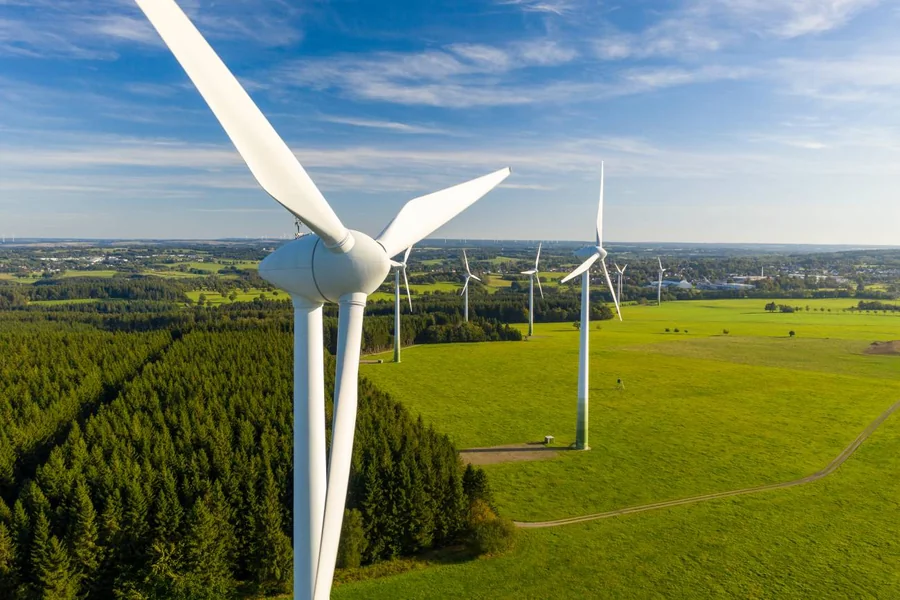
India’s 500 GW non-fossil target by 2030 under the National Electricity Plan 2023 isn’t background context anymore. It’s shaping procurement, employment, and what engineering colleges need to teach. Rajasthan, Gujarat, Tamil Nadu, these states are building wind capacity at scale. The engineers operating those projects have to come from somewhere.
AICTE’s push toward outcome-based education has given departments a structured reason to act. wind labs satisfy multiple accreditation parameters at once, which is exactly the kind of investment university leadership finds easy to approve. NBA and NAAC evaluation criteria increasingly reward practical infrastructure, and a well-documented wind lab ticks several boxes in a single line item.
What’s Actually Inside a Proper wind labs
A rooftop turbine and a poster about Betz’s law doesn’t count. Institutions serious about wind education are building setups around two distinct platforms, each handling a different layer of learning.
The first is a physical wind energy training system, a small-scale real turbine paired with a controlled wind source. Students use it to measure actual turbine behaviour: cut-in speed, start-up speed, cut-off speed, rotor tip-speed ratio, and coefficient of performance. They plot Cp vs lambda curves and calculate how closely the turbine approaches theoretical limits. The system then extends into a standalone configuration, with charge controllers, batteries, and inverters connected to small loads. Students see how wind energy moves from rotor to storage to usable power, and where losses creep in along the way.
The second platform is a wind turbine emulator, a motor-generator setup that replicates turbine characteristics without needing actual wind. It runs in manual mode, simulated wind profile mode, and table mode, where users upload specific turbine performance data to emulate different machine types. This is where postgraduate research happens. Students and researchers test MPPT algorithms, develop converter topologies, study grid synchronisation, reactive power control, and fault behaviour. The control code should be open and editable, which means researchers can implement their own strategies rather than working around a locked system. LabVIEW, MATLAB and Simulink integration is supported, as is FPGA-based control for hardware-in-the-loop studies.
Together, these two systems cover the full arc from undergraduate fundamentals to doctoral-level experimentation. Purpose-built wind labs configured this way give a department genuine research capability, not just demonstration apparatus.
The Funding Loop Nobody Talks About Enough
Here’s how it tends to play out. A university sets up a functional wind energy lab. Six months later they apply for a DST or MNRE research grant that previously they wouldn’t have been eligible for. They get it. That grant pays for the next round of equipment. Within two grant cycles, the lab is significantly better than what they originally installed, and largely at government expense.
This isn’t hypothetical. It’s the pattern several institutions have already followed. Horizon Europe collaborations have worked similarly. European research partners specifically seek Indian universities with physical testing infrastructure. The lab is the entry ticket. Without it, those conversations don’t start.
Industry Partnerships Follow the Equipment
Turbine OEMs and EPC contractors are practical about where they invest relationship capital. A university with a working wind lab gets MoU conversations that an institution without one simply doesn’t. Equipment donations, co-funded research, internship pipelines, these tend to flow toward departments that have already committed resources to the field.
For university management trying to justify capital expenditure to a governing board, this changes the calculus. The lab isn’t a cost. It’s a platform. The industry attention it attracts generates returns that are hard to put on a spreadsheet but very visible in annual reports.
Students Are Voting with Their Applications
Enrolment data at departments that have invested in wind and renewable energy labs tells an interesting story. Students researching M.Tech and even B.Tech options are specifically looking at lab infrastructure now. Wind energy is not a niche interest anymore. It’s a career track with clear geography. If you want to work in Rajasthan’s wind corridor or Tamil Nadu’s coastal belt, you want to graduate with more than theory.
Companies have started stating lab experience as a preferred criterion in campus recruitment briefs. That preference, communicated clearly enough times, shapes where serious students apply. And where serious students apply, placement numbers follow.
Where This Goes from Here
The cost of setting up a credible wind lab has dropped. Modular designs, locally available components, and better supplier ecosystems across India mean that mid-tier colleges can now afford setups that would have required IIT-level budgets a decade ago. That’s why adoption is spreading beyond the premier institutions.
In 2026, the institutions building wind labs aren’t early adopters anymore. They’re the ones catching up to where the energy sector already is. The ones that wait another two or three years will find the talent gap they claim to be addressing has already been filled by someone else’s graduates.