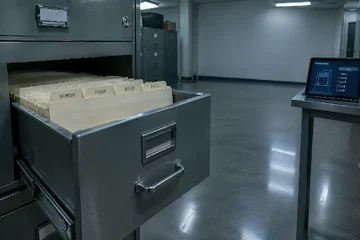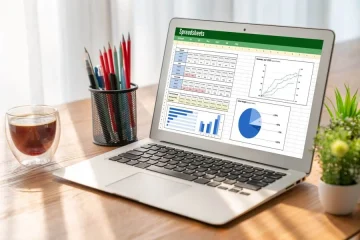


Today’s learning centers and institutions are expected to offer many of the same amenities as modern offices. This makes perfect sense since the same highly connected, safe, and comfortable space that fosters an ideal work environment can also be applied to instructional and classroom settings. Much like commercial offices, educational settings must operate efficiently while also providing the flexible and adaptable cabling infrastructure necessary for future generations of students and staff.
Why Technology and Data Matter in Modern Educational Facility Management
The widespread adoption of new technologies is not limited to the business world. New technologies, such as Artificial Intelligence (AI), Virtual Reality (VR), and Augmented Reality (AR), offer significant benefits to college students by enhancing learning, improving organization, and fostering collaboration skills. These virtual reality simulations, along with various productivity and communication platforms, can empower students with different learning styles to excel in their studies and better prepare for the future.
While much of the workforce has returned to the office, the demand for remote learning continues to be high. According to instructional designer Devlin Peck1, online learning has increased by 900% since its inception, and the number of online learners is expected to reach 57 million by 2027. As a result, campuses and learning centers will require additional data bandwidth to support these new technologies for both in-person and remote instruction, as well as for instructors and students.
However, facility teams can leverage these same technologies to streamline their workflows and manage operational costs effectively. Here are a few of the most common examples.
Building Management Systems (BMS) for centralized control of HVAC, lighting, security, and access. This allows temperature and lighting adjustments based on class schedules or actual usage.
CAFM/CMMS platforms to automate work orders, maintain product inventories, schedule preventive maintenance, and track assets across their lifecycle. Digital documentation and schedules can be created and adjusted on an as-needed basis. (Computer-Aided Facility Management/Computerized Maintenance Management Systems)
IoT sensors for monitoring occupancy levels, air quality, temperature, and energy use, and relay data to CFFM/CMMS or Smart City applications to allocate resources and reduce operational costs.
Room scheduling systems that integrate with event calendars to minimize space underutilization and prevent overbooking issues.
Clearly, these new technologies can benefit instructors, students, and facility teams; however, data system upgrades can be influenced by a variety of factors.
Smarter Campus Challenges and Considerations
One of the most common issues involves integrating new technology and equipment into an existing data system. Data security and access control requirements must be considered when determining the potential for an upgrade. Another factor is the need to train staff on the proper use and adoption of new systems or equipment. Perhaps the most important factor in creating a smarter campus is the ease of accessibility to the data cabling system.
Most existing campuses rely on data cable trays above the finished ceiling to run Ethernet cabling from point to point throughout the space. Adding or rerouting any cabling requires the cost and inconvenience of traditional construction methods. To reduce future costs while improving cable accessibility, many campuses are turning to raised access flooring systems, such as the Gridd® Adaptive Cabling Distribution® System.
Gridd utilizes modular steel panels to create a small airspace above the existing floor system for routing the necessary data and Ethernet cables. As changes become necessary, removing a section of the modular flooring (typically carpet tiles) provides quick and easy access to any cable or connection point.
Gridd is ideal for new construction and renovation projects as it requires no special fasteners or tools to install. Gridd complies with the intent of the provisions of the following codes and regulations certified by an IAPMO UES Evaluation:
- 2021, 2018, 2015, 2012, and 2009 International Building Code® (IBC)
- 2013 Abu Dhabi International Building Code (ADIBC)
- 2023 City of Los Angeles Building Code (LABC)
- 2022 California Building Code (CBC)
Gridd is also a LEED and GreenSpec-listed product line, helping teams achieve maximum sustainability while meeting all current Green Building codes.
Becoming a Smart Campus Facility Leader
The fast adoption of these newer technologies means that a flexible and upgradeable data cabling system is no longer an option for most school campuses. It’s become essential for a responsive, highly connected, and efficient learning environment. However, these same technologies can also assist facility teams in transitioning from a reactive to an intelligent, proactive (preventive) strategy. By analyzing the collected data, teams can make more informed decisions to reduce operational and maintenance costs, while addressing the specific data needs of colleges and other learning centers.
Smart campus facility leaders should start by auditing their current tech stack for potential deficiencies or system limitations. Identify low-cost wins and long-term goals, such as upgrading the Ethernet cables, connection points, or the existing CMMS/CAFM platforms. According to a recent International Facility Management Association (IFMA)2, the most popular platforms include:
IBM Maximo: Utilizes AI and IoT to detect anomalies, manage asset performance and streamline maintenance workflows.
SAP Predictive Maintenance: Provides real-time equipment monitoring and predictive insights to reduce operational risks.
Azure AI: Leverages cloud-based machine learning to analyze sensor data and predict failures with high accuracy.
Assemble a list of potential projects to address the educational and preventive maintenance needs of the campus. Verify that these upgrades align with the institutional goals and budget constraints. This will allow facility teams to not only manage, but also elevate the educational space or campus for future generations of instructors and students.To learn moe about using raised access flooring to create smarter campuses, please contact a Gridd Advisor.